
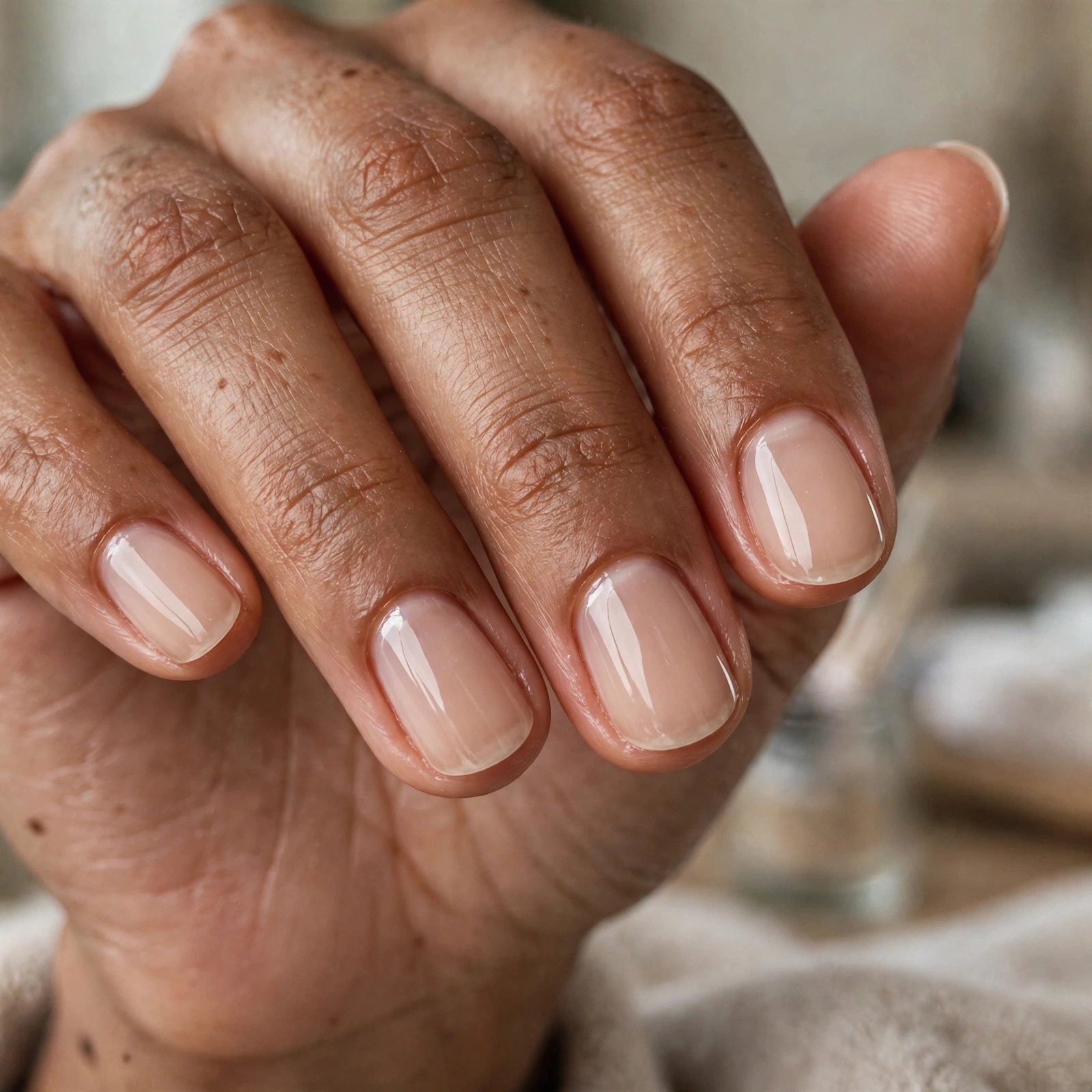
I have sat in the salon chair trying to explain what I wanted and realised halfway through that I was using the wrong words. I asked for BIAB when I meant a gel polish colour, and I asked for gel polish when what I actually needed was the strengthening layer underneath it. If that sounds familiar, you are not alone, because the BIAB versus gel polish question is the most confusing comparison in nails. It sounds like a choice between two rival manicures, and most salons list them as if they are. The truth I learned after wearing both, sometimes in the same appointment, is more useful and a little less dramatic: BIAB and gel polish are not really rivals at all. One is a strengthening base layer, and the other is the colour and finish that usually goes on top of it.
Let me clear up the names first, because they cause most of the confusion. BIAB stands for builder in a bottle, and it is the same family as builder gel. Different salons use different words depending on the brand they stock, but when I say BIAB in this article I mean that thick, brush-on, soak-off builder gel that is painted onto your natural nail and cured under a lamp to add real structure. Some people also say “builder gel” for the thicker pot version applied with a separate brush, and “BIAB” for the bottle version with a brush built in, but for your nails the job is the same: build strength, create an apex, and protect the natural nail while it grows. Gel polish, on the other hand, is the thin, coloured polish that cures under a lamp — the stuff most of us mean when we say “a gel manicure.” It gives you colour, shine, and a hard finish that lasts far longer than regular polish, but on its own it adds almost no strength. You can wear gel polish on bare nails, you can wear it over BIAB, and you can wear it over extensions, and that flexibility is exactly why comparing them like-for-like misses the point.
I have worn gel polish alone on healthy, medium-length nails and loved how thin and natural it felt. I have also worn it alone on peeling, bendy nails and watched it lift at the free edge within five days, no matter how good the technician was. I have worn BIAB under that same gel polish colour and watched the same nails last three and a half weeks without a chip, growing visibly longer underneath. I have also paid for BIAB when I did not need it, on strong nails that would have been perfectly happy with gel polish alone, and that was money spent on structure I did not need. This comparison is the honest version I wish someone had given me: what each one actually does, how long each lasts in real life, what they do to your nails, what they cost over three months rather than one appointment, whether you can do either at home, how each comes off, and who should genuinely pick which. I will give you a clear verdict at the end, but I will also show you why the smartest choice for many people is not either-or at all.
In This Article
- What BIAB Actually Is
- What Gel Polish Actually Is
- The Honest Truth: Most BIAB Sets Are Both
- Longevity: Does BIAB Really Last Longer Than Gel Polish?
- Nail Health: Is BIAB Better for Weak Nails?
- Look and Feel: Thickness, Finish, and Shape
- Cost and Appointment Time Over Three Months
- At-Home Feasibility: Lamps, Viscosity, and Flooding
- Removal: Time, Method, and Damage Risk
- Who Should Pick Which? My Decision Guide
- My Final Verdict
- Mistakes to Avoid
- Frequently Asked Questions
What BIAB Actually Is
BIAB is a builder gel in a bottle, and the word “builder” is doing all the work in that name. Unlike a thin polish, BIAB is a thick, self-levelling gel that your technician brushes onto your natural nail in layers and cures under a lamp, building up a slightly domed structure with a thicker zone near the centre of the nail called the apex. That apex is not cosmetic decoration. It is engineering. It spreads the pressure of everyday knocks across the whole nail plate instead of letting it concentrate at the corners and free edge, which is exactly where natural nails split and peel. The first time I had BIAB, I was underwhelmed for about ten seconds, because my nails looked like a very neat gel manicure and nothing more dramatic. Then I lived in them for three weeks, and I understood. Nothing snapped, nothing peeled at the corners, and by my second infill I had free edge that was actually mine, longer than my nails had ever managed to stay.
BIAB is designed to stay on your natural nail and grow out with it. At most appointments you do not soak it all off and start again. Your technician files back the grown-out area, rebalances the apex, and applies fresh builder gel over the existing layer, in a maintenance visit called an infill. That rhythm matters, because it means your nail is continuously protected rather than repeatedly stripped bare and rebuilt. It also means BIAB is fundamentally a nail-care system as much as a beauty treatment. People do not usually book BIAB because they want a wild colour for the weekend, although you can absolutely have that. They book it because their nails keep breaking, peeling, or refusing to grow, and they want a few months of support while their own nails get longer and stronger underneath. If you want the full step-by-step of how it is applied, my builder gel guide walks through the BIAB process from prep to infill, including what that first appointment should feel like.
How thick BIAB should feel on the nail
A proper BIAB application should feel like a real layer, not like a coat of polish. When I run a fingertip over a good BIAB nail, I can feel a gentle dome when I look at it from the side, and the nail feels sturdier when I press it lightly against a hard surface, without feeling rigid or heavy. It should not feel like a thick acrylic shell, and it should not feel so thin that you cannot tell it is there. That middle ground is the whole skill. I have had a BIAB set applied too thinly, almost like gel polish, and it peeled at the free edge within a week because there was no apex to distribute pressure. I have also had it applied too thickly, with a visible shelf at the cuticle, and that trapped lifting and looked grown-out within days. A good technician builds the thickness in the middle third of the nail, keeps the cuticle area thin and sealed, and caps the free edge so water cannot creep underneath. If your BIAB feels exactly like regular gel polish, ask whether an apex was built at all, because without it you have paid builder-gel prices for a polish result.
Best for: Anyone whose nails peel, split, or break before they reach the length they want, and who is willing to commit to infills for a few months to grow their own nails out.
What Gel Polish Actually Is
Gel polish is the thin, coloured gel that most people picture when they say “gel nails,” and it deserves more respect than it gets in comparison articles that treat it as the weaker option. A gel polish manicure starts with a base coat, then two thin coats of colour, then a top coat, each cured under a UV or LED lamp for thirty to sixty seconds. The result is a glossy, hard finish that dries instantly — no smudging on the way home, no waiting for polish to harden — and that typically lasts two to three weeks without chipping if the prep is good and the nails are reasonably strong. It is the fastest, lightest, most natural-feeling salon manicure, and on healthy nails it is genuinely hard to beat for everyday wear. I wore gel polish alone for years before I ever tried BIAB, and for most of that time it was exactly right.
What gel polish does not do is build structure. A coat of colour, however perfectly applied, is only a fraction of a millimetre thick, and it follows the shape and weakness of the nail underneath it. If your nail bends, the polish bends with it, and eventually that flexing breaks the bond at the free edge or the sidewalls, which is why gel polish lifts and peels on bendy, thin nails even when the application was flawless. That is not a product failure. It is a mismatch between what the product is for and what the nail needs. Gel polish is colour and protection in a thin layer. It seals the surface, it looks beautiful, and it stops you catching the nail on fabrics the way bare nails do, but it will not hold a splitting nail together, it will not create an apex, and it will not turn a short, weak nail into a long, strong one. Understanding that limit is what stops you blaming your technician for a lifting problem that was always about structure.
Where gel polish shines on its own
Gel polish on its own shines brightest on nails that are already in good shape. If your nails are medium strength, do not peel in layers, and hold a shape without snapping, a gel polish manicure feels almost like nothing is on your nails, which is exactly what many people want for work, for the gym, and for everyday life. I love it for short, neat nails, for sheer nude colours that look like a better version of my bare nail, and for weeks when I know I will want to change colour soon anyway. It also removes faster than any builder system, which matters if you like variety, and it is the easiest gel system to do safely at home, because the thin coats are forgiving and the removal soak is short. The trick is being honest about your nails on the day you book. If you are booking gel polish because it is cheaper and quicker, but your nails are peeling and breaking, you are buying the wrong service, and you will be back in the salon a week later with lifting that no top coat could have prevented.
Best for: Healthy, reasonably strong nails that need colour and a glossy finish, not rescue, and people who change colour often or prefer the thinnest, most natural feel.
The Honest Truth: Most BIAB Sets Are Both
Here is the framing that changed how I book appointments, and it is the single most useful thing in this whole comparison: most BIAB manicures you see are also gel polish manicures. The technician applies BIAB as the clear or nude strengthening base, cures it, and then paints gel polish colour over the top, exactly as they would on a bare nail, and finishes with a top coat. When someone posts a photo of a perfect red BIAB manicure, what you are admiring is usually gel polish colour sitting on a BIAB foundation. The two products are layers in the same manicure, not two teams competing for your booking. That is why salon price lists can be so confusing. One salon charges for “BIAB” and includes the colour, another charges for BIAB as an add-on over gel polish, and a third lists “builder gel manicure” and “gel manicure” as if you must choose one or the other, when in practice you are choosing whether to add the strengthening layer underneath the colour you were going to have anyway.
This matters because it reframes the question you should actually ask. Instead of “BIAB or gel polish?”, ask “Do my nails need a builder layer under the gel polish, or is gel polish on its own enough for my nails right now?” I ask it that way now, out loud, at the start of every appointment, and good technicians visibly relax, because it tells them I understand what they are selling. If your nails are strong, the answer is usually gel polish alone, and you save money and time. If they are weak, peeling, or growing out from damage, the answer is BIAB underneath the gel polish colour, and the extra cost buys you weeks of extra wear and a nail that is longer at the end than it was at the start. There are also clear BIAB-only looks, usually a sheer nude or milky builder colour with a top coat and no separate colour layer, which some people wear for a very natural finish. Those are beautiful and practical, but they are the exception. The everyday reality for most of us is a combination set, and once you see it that way, the rest of this comparison falls into place: you are not choosing a colour system, you are choosing a foundation.
Fino Tip: Ask your technician to show you how your chosen gel colour looks over a clear BIAB base versus a nude BIAB base before the full application. Sheer colours shift noticeably over a nude builder, and one swatch saves you three weeks with a shade you dislike.
Longevity: Does BIAB Really Last Longer Than Gel Polish?
The headline figures you will see online are broadly right, but they hide the reason behind the difference. In my experience, gel polish alone lasts a solid two to three weeks on healthy nails, with wear showing first as tiny chips at the free edge and a visible growth gap at the cuticle. BIAB under gel polish lasts three to five weeks, and I have regularly had four weeks with only cuticle growth to show for it. The gap is not because BIAB colour is magically tougher. It is because the builder layer underneath stops the flexing, peeling, and edge-catching that cause gel polish to fail early. A gel polish colour bonded to a rigid, well-built BIAB foundation does not bend with every knock, so it does not lever itself off the nail. The same colour on a bendy bare nail flexes, micro-cracks at the stress points, and lifts in exactly the places you use your hands most. Longevity, in other words, is a property of the foundation, not the colour.
That said, longevity is never just about the product. Length, shape, and how you use your hands matter as much as the system. Short, rounded gel polish nails on someone who wears gloves for cleaning will routinely outlast long, square BIAB nails on someone who opens cans with their nails and never oils their cuticles. I learned this when a short gel polish set lasted me a full three weeks during a quiet office stretch, while a longer BIAB set chipped at the corners during a house move. The product did not change its nature. My hands did. What I can say with confidence, comparing like with like on my own nails at a sensible medium length, is that BIAB adds roughly a week to a week and a half of reliable wear, and it changes the way wear appears. Gel polish alone tends to fail suddenly, with a chip or a peel that makes the whole nail look unfinished. BIAB tends to age gracefully, with growth at the cuticle as the main signal that it is time to go back, which is far easier to live with in week three.
Nail Health: Is BIAB Better for Weak Nails?
If your nails are thin, peeling, bendy, or recovering from acrylics or from a bad removal, BIAB is usually the better starting point, and I say that as someone who tried to rescue weak nails with gel polish alone for far too long. Gel polish does not make weak nails weaker, but it also does not protect them in any meaningful structural way. A thin colour layer over a peeling nail will peel with the nail, and every time it lifts, you are tempted to peel it further, which takes more nail with it. BIAB breaks that cycle by bonding a thicker, structured layer to the nail and staying there, growing out with it, so the nail underneath is shielded from water, soap, and daily knocks for weeks at a time. I noticed the change most clearly on my index fingers, which used to peel in fine layers from the tips inward. Under BIAB, that peeling stopped, because the gel layer took the wear instead of my nail plate, and when the builder was eventually soaked off, the nails underneath were smoother and longer than they had been in years.
That does not mean BIAB is harmless, or that gel polish is damaging, and the distinction matters for AdSense-safe honesty as much as for your nails. Neither system damages a healthy nail when it is applied and removed properly. Damage comes from the same three culprits in both cases: over-filing the natural nail during prep, prying or peeling product off instead of soaking it off, and leaving lifting product on for weeks while moisture sits underneath it. BIAB carries two specific risks that gel polish carries less of, and you should know them before you book. The first is over-filing, because a technician who files the nail plate aggressively to get the builder to grip will thin the very nail the builder is meant to protect. The second is allergy and sensitivity, because builder gels are thicker, stay in contact with the skin longer during application, and must never be cured on the skin. Gel polish can cause the same sensitivity if it floods the cuticles, but the thicker BIAB application gives it more opportunity. If prep hurts, if your nails feel paper-thin afterwards, or if you develop itching, redness, or soreness around the cuticle, that is a salon and product problem to take seriously, not something to push through for the sake of a pretty set.
Look and Feel: Thickness, Finish, and Shape
Visually, a BIAB manicure and a gel polish manicure can look almost identical in a photograph, which is why choosing from Instagram alone is so misleading. Both can be finished with any gel colour, chrome, French tips, or nail art, and both look glossy and salon-finished on day one. The difference shows up in your hands, in the silhouette, and in how the nail feels when you use it. Gel polish alone feels like almost nothing. The nail stays flexible, thin, and completely natural in profile, which is wonderful if you love a bare-nail feel and hate the sensation of product. BIAB feels like a real layer. From the side you can see a gentle dome, the apex, and the nail feels sturdier and slightly plumper, especially in the middle third. I have come to like that feeling, because it tells me the nail is protected, but I know people who tried BIAB once and went straight back to gel polish because they could feel the thickness every time they typed, and that preference is completely valid.
Which lengths and shapes suit each system
My rule of thumb, after wearing both at every length I have attempted, is simple. Short and short-medium nails suit both systems beautifully, and gel polish alone is often the prettier, more natural choice there. Medium nails, especially almond, oval, and soft square, are where BIAB starts to earn its keep, because the apex supports the length and keeps the shape from looking flat or droopy as it grows. Long natural nails can work under either system, but BIAB gives them a safety margin that gel polish alone does not, particularly at the corners, where long nails always fail first. Square shapes deserve a special mention, because their sharp corners are stress points. I have had square gel polish nails chip at the corners within days, while the same square shape under BIAB held for weeks, because the builder layer reinforced exactly the point that was failing. If you love a crisp square and your nails are on the weaker side, that reinforcement is worth more than any top coat. If your nails are strong and you keep them short, the thinness of gel polish will look and feel more elegant than a builder layer you never needed.
Best for: A thin, bare-nail feel and short neat shapes go to gel polish, while medium lengths, almond and oval shapes, and crisp squares on weaker nails go to BIAB.

Cost and Appointment Time Over Three Months
A single-appointment price comparison will mislead you, because BIAB and gel polish are priced on different rhythms. I learned to compare three months, not one visit, and when I did, the gap between the two systems shrank considerably, and in some patterns it disappeared. Gel polish alone is usually the cheaper single appointment, because it is quicker to apply: a standard gel manicure takes roughly forty-five to sixty minutes, including prep, colour, and top coat. BIAB takes longer, typically sixty to ninety minutes for a full set, because the technician is building and balancing the apex in layers, curing between coats, and shaping the structure, not just painting colour. Salons price that extra time and product accordingly, so a BIAB manicure with colour is usually priced above a gel polish manicure, sometimes by a modest amount and sometimes by a substantial one, depending on your city and the salon.
Over three months, though, the maths changes, because the two systems are not maintained the same way. Gel polish is almost always a full removal and reapplication every two to three weeks, which means you pay the full manicure price every single visit, plus a removal fee at some salons, and you sit through the full appointment time again. BIAB, once the foundation is in place, is usually maintained with infills. An infill appointment is quicker and cheaper than a full set, because the technician is filing back the grown-out area, rebalancing the apex, and adding fresh builder over the existing layer, rather than soaking everything off and starting from bare nails. In my own three-month pattern, that worked out like this: gel polish alone meant five full appointments in twelve weeks, while BIAB meant one full set followed by three infills, with the infills costing noticeably less and taking less time. The total spend ended up close, and BIAB was sometimes cheaper overall, despite the higher first bill. Your salon’s exact pricing will decide the winner for you, so ask for all three numbers before you book: the full-set price, the infill price, and the removal price. Those three figures together are the real cost of living with a system, and any comparison that only quotes the first one is hiding the story.
At-Home Feasibility: Lamps, Viscosity, and Flooding
At home, the difference between BIAB and gel polish is the difference between a forgiving project and a fiddly one, and I have tried both at my kitchen table, so I am speaking from experience rather than theory. Gel polish at home is genuinely doable for most people. The coats are thin, they self-level quickly, and a mistake is easy to wipe away before curing. You still need a proper lamp, a dehydrator and primer if your nails lift easily, and the discipline to keep product off your skin, but the learning curve is gentle, and a first set that is slightly imperfect will still look good and last a couple of weeks. I did my own gel polish for months before I ever had BIAB, and the home routine taught me more about prep and cuticle care than any salon visit had. The investment is modest: a lamp, a base, colour, and top coat, plus the files and oil you should own anyway.
BIAB at home is a different proposition, and I want to be honest about why. The product is thick and viscous, which is exactly what makes it good at building an apex, and exactly what makes it hard to control if you have never used it. A thick gel that sits too close to the cuticle will flood, meaning it runs onto the skin before you cure it, and product cured on skin is both a lifting risk and a sensitivity risk. Building an apex requires you to place the gel deliberately, let it self-level without overworking it, and cure it before it migrates, all while working on your non-dominant hand with a brush that feels too big for the job. I have done it, and I have had sets that lasted well, but my first attempts were lumpy, flooded at the cuticles, and peeled within days, because I had not yet learned how little product to use or how to hold the brush at the right angle. It is learnable, and there are excellent tutorials, but it is not a first-week project. If you are new to gels, start with gel polish at home, learn prep and skin discipline there, and graduate to BIAB once you can paint a clean, flood-free gel manicure with your eyes closed.
Removal: Time, Method, and Damage Risk
Removal is where I see the most regret, because people choose a system for how it looks on day one and never ask how it comes off on day twenty-one. Both BIAB and gel polish are soak-off systems, which is good news, because neither requires the aggressive filing that hard gels and acrylics sometimes do. The difference is time, and time is a fair proxy for thickness. Gel polish removal is quick: file through the top coat to break the seal, wrap the nails in acetone-soaked cotton and foil, wait ten to fifteen minutes, and push the softened polish away gently. A full gel polish removal at home takes me about twenty to thirty minutes including aftercare, and in-salon it is often folded into the next appointment with barely a pause. If you want the exact method I use, my at-home gel polish removal guide walks through the foil-and-acetone method safely, and the same patience rule applies here as everywhere: never force, never pry, and if it resists, it goes back in the acetone.
BIAB removal takes longer, because there is simply more product to dissolve. A full soak-off of a built-up BIAB set takes twenty to forty minutes in acetone, sometimes longer for thicker applications, and the technician will usually file down much of the bulk before soaking to speed things up. That filing is safe when it is done carefully and stops well short of the natural nail, but it is also the step where an inexperienced hand can thin the nail plate, so it is worth watching. In practice, though, most BIAB wearers rarely do a full removal at all, because infills maintain the existing layer. That is the real removal advantage of BIAB: you soak off fully only when you are taking a break, changing systems, or fixing a problem, while gel polish wearers soak off fully every single time. Over three months, that means fewer full acetone soaks for the BIAB wearer, less repeated drying of the skin and cuticles, and nails that are never left completely bare and vulnerable between sets. The damage risk for both systems is the same and almost entirely behavioural: peeling, prying, and over-filing cause the damage, not the acetone or the gel. A patient soak-off leaves both systems’ wearers with nails that feel dry but intact. A peeled-off set leaves thin, sore nails that take months to recover, whichever system you started with.
Fino Tip: Before you book, ask for the full-set price, the infill price, and the removal price in one message. Those three numbers together tell you the real three-month cost, and salons respect clients who ask upfront.
Who Should Pick Which? My Decision Guide
If I had to turn this whole comparison into a decision you can make in thirty seconds, it would come down to one question: do your nails need structure, or do they just need colour? If your nails are strong, do not peel, and hold their shape without snapping, you do not need a builder layer, and gel polish alone will give you the thinnest, most natural, cheapest, and quickest result. Book it, enjoy it, and spend the money you saved on good cuticle oil. If your nails peel in layers, snap at the corners, bend so far that polish lifts within days, or are growing out from damage, you need structure, and BIAB under your gel polish colour is the honest pick. It will feel thicker, cost more at the first appointment, and take longer to apply, but it will carry your nails through the growth phase that gel polish alone cannot, and after a few months you may find your nails are strong enough to go back to gel polish alone. That journey, from builder to bare gel polish, is the success story BIAB is designed for, and it is far more satisfying than any single dramatic set.
The people in the middle, and my hybrid answer
Many people live in the middle, and I did for a long time: nails that are mostly fine but peel at the corners, or one or two problem nails that always break while the rest behave. For that group, my hybrid answer is the one I actually use myself, and it is worth asking your technician about. Have BIAB applied to the problem nails only, or as a thin builder layer across all nails with gel polish colour over the top, and then reassess after two or three infills. Some technicians will happily do a targeted builder application on the weak nails and gel polish alone on the strong ones, which gives you the best of both without paying for structure you do not need everywhere. Another hybrid pattern that works well is seasonal: BIAB through a growth phase or a busy, hands-on period, then gel polish alone for a lighter summer or a holiday when you want frequent colour changes. There is no prize for loyalty to a single system, and the best technicians will happily talk you through switching, because they would rather keep your nails healthy for years than sell you the same set every month until your nails give up. If you are weighing a bigger switch that involves length as well as strength, my acrylic versus gel comparison is useful background, because it shows where builder systems sit in the wider family of enhancements and when an extension is genuinely the better tool.
Best for: Strong nails and frequent colour changes go to gel polish alone; weak, peeling, or growing nails go to BIAB under gel polish; and if you are in between, ask for a targeted or seasonal hybrid rather than forcing one system to do everything.
My Final Verdict
After wearing both systems, in both roles, my verdict is not a tie for the sake of diplomacy. It is a genuine split, and the split follows your nails, not the products. Gel polish is the better colour system: it is thinner, quicker, cheaper per visit, easier to remove, and more natural feeling, and on healthy nails it is everything a manicure needs to be. BIAB is the better foundation system: it strengthens what you already have, it grows out gracefully through infills, it adds a week or more of reliable wear, and it leaves you with longer, healthier natural nails at the end of the process. If you forced me to pick one system to wear for the next year with no switching, and my nails were as they are today — mostly strong, with a tendency to peel at the corners in dry weather — I would pick BIAB under gel polish, because I value waking up with protected nails more than I value the thinnest possible feel. But if you asked me what to book for strong, healthy nails that just need a beautiful colour for two weeks, I would tell you gel polish alone without hesitating, because adding a builder layer there is solving a problem you do not have.
Best for: My overall verdict is BIAB under gel polish for weak or growing nails, and gel polish alone for strong nails that just need colour — so pick the foundation first, and the colour second.
Mistakes to Avoid
The first mistake I made, and the one I see most often, is treating BIAB and gel polish as rivals and picking one based on price or a photo, without asking whether my nails needed structure at all. That leads to gel polish on peeling nails that lifts in a week, or BIAB on strong nails that feels thick and costs more for no benefit. Ask the foundation question first, every time. The second mistake is accepting a BIAB application with no apex. Without that built-up structure in the centre of the nail, BIAB is just expensive polish, and it will peel at the free edge within days, leaving you convinced the system failed when the application did. If your BIAB feels completely flat from the side, say so before the colour goes on. The third mistake is letting product flood the cuticles, in either system. Gel cured on skin lifts, irritates, and increases sensitivity risk, and thick BIAB flooding is worse than thin gel polish flooding because there is more product to migrate. A clean cuticle line is not fussiness. It is safety and longevity in one detail.
The fourth mistake is peeling or prying off a lifting edge instead of soaking it off properly. It feels quicker in the moment, and it always costs you layers of your natural nail, which then stay weak for months, whatever system you were wearing. If a nail lifts, book a removal or do a proper acetone soak at home, and resist the urge to pick at it while you wait. The fifth mistake is skipping cuticle oil and then blaming the product when nails become brittle and polish chips early. Gel systems protect the nail surface, but they do not hydrate the skin and nail around them, and dry cuticles crack, catch, and lift the product from the edges. A daily drop of oil is the cheapest longevity trick in nail care. The sixth mistake is leaving a lifting set on for weeks because you cannot get an appointment. Once water gets under lifted product, the area stays damp, and you risk irritation and further damage when the loose piece finally catches and tears. If you cannot get in promptly, a careful soak-off at home is better than wearing a lifting set for another fortnight. Finally, do not let a salon over-file your natural nail plate during prep. Healthy prep is gentle: a light buff to remove shine, not aggressive filing that thins the nail before product even goes on. If prep hurts or your nails feel paper-thin afterwards, that salon is not the right one, no matter how pretty the finished set looks.
Frequently Asked Questions
Does BIAB last longer than gel polish?
Yes, in most cases, by about a week to a week and a half on comparable nails. Gel polish alone typically lasts two to three weeks, while BIAB under gel polish typically lasts three to five weeks, because the builder layer stops the flexing and edge-catching that cause gel polish to lift early. The gap is largest on weak or peeling nails and smallest on short, strong nails, where gel polish alone can easily last a full three weeks.
Is BIAB better than gel polish for weak nails?
For most weak, peeling, thin, or recovering nails, yes. BIAB builds structure directly on the natural nail and protects it continuously between infills, so the nail underneath gets stronger over time instead of repeatedly flexing and peeling. Gel polish alone is not harmful to weak nails, but it adds almost no strength, so it will not rescue a nail that keeps splitting at the free edge.
Can you paint gel polish over BIAB?
Yes, and that is how most BIAB manicures are actually done. BIAB is applied and cured as the strengthening base layer, and gel polish colour is painted over it, followed by a top coat. You get the full gel polish colour menu with the added structure of the builder underneath, which is why the honest question is not BIAB or gel polish, but whether you need the builder layer under your colour.
Does BIAB damage nails?
BIAB itself does not damage healthy nails when it is applied and removed properly. Damage almost always comes from over-filing during prep, from product cured on the skin, from peeling or prying it off instead of soaking it off, or from leaving lifting product on for weeks. A patient soak-off and gentle prep should leave your nails dry but intact, and many people find their nails are longer and smoother after several months of BIAB with infills.
Can BIAB be used on its own without gel polish colour?
Yes. Many people wear a sheer, nude, or milky BIAB colour with just a top coat for a very natural finish, and that is a lovely low-maintenance look. It is also the easiest way to see whether you like the feel of the builder layer before you commit to colours over it. If you want a full opaque colour, though, a gel polish layer over the BIAB base gives you the widest shade range.
How much does BIAB cost compared with gel polish over three months?
A single BIAB appointment usually costs more than a single gel polish appointment, because it takes longer and uses more product. Over three months the gap narrows, because BIAB is maintained with cheaper, quicker infills, while gel polish is usually a full removal and reapplication every time. Ask your salon for the full-set, infill, and removal prices together, because those three numbers tell you the real three-month cost for your own nail growth and appointment pattern.
Is BIAB the same as builder gel?
Essentially, yes. BIAB stands for builder in a bottle, and it is the bottle version of builder gel, applied with a brush built into the bottle. Some salons use the thicker pot version of builder gel applied with a separate brush, but both are the same family of thick, soak-off, structure-building gels. The names vary by brand and salon, but the job — building an apex and protecting the natural nail — is the same.
Can I do BIAB at home, or should I stick to gel polish?
Gel polish is the better starting point at home, because thin coats are forgiving and mistakes wipe away easily before curing. BIAB is learnable at home, but the thick, viscous gel is harder to control, floods the cuticles more easily, and requires you to build an apex deliberately. Start with gel polish, learn clean, flood-free application there, and graduate to BIAB once you can paint a tidy gel manicure on your non-dominant hand without product touching the skin.


Pingback: How to Remove BIAB Nails at Home (2026)
Pingback: How Long Do Gel Nails Last? My 2–3 Week Timeline (2026)
Pingback: Is BIAB Good for Your Nails? Benefits, Risks & Verdict