

I’ve worn Gel-X for three months straight and dip powder for almost a year before that, and the question I get asked more than any other in my comments is some version of this: Gel-X vs dip powder — which one actually lasts longer? Soft gel extensions vs dip, gel tips vs powder nails, Gel-X or dip — same question, different words. I use Gel-X vs dip powder here because that’s what most of you type into Google, but we are talking about the same two systems either way.
Here is my honest verdict before we get into the details: dip powder survives longer on the nail in real life, by about a week, and it tolerates rougher treatment. Gel-X looks and feels more natural, removes in a fraction of the time with far less damage, and wins for anyone who changes their set often. Neither is bad. They are built for different people, and picking the wrong one for your lifestyle is how you end up out $70 and frustrated on day nine. I know, because I did exactly that — twice, in opposite directions.
What I am going to do in this comparison is something most articles skip: judge both systems across five real-life rounds — longevity, nail health, removal, cost and salon time, and looks — based on what each system felt like at day 7, day 14, and removal day on my own hands. Not lab claims. Real hands, real dishwashing, real gym sessions, real typing.
In This Article
- What Each System Actually Is (And Why the Confusion Matters)
- Round 1: Longevity — Which Survives Real Life?
- Round 2: Damage & Nail Health
- Round 3: Removal (The Part Nobody Warns You About)
- Round 4: Cost & Salon Time
- Round 5: Looks, Shapes & Versatility
- My Verdict: Which Should You Choose?
- Mistakes to Avoid
- FAQ
What Each System Actually Is (And Why the Confusion Matters)
Half the confusion around this comparison comes from the fact that Gel-X and dip powder sound like cousins and behave like distant relatives. Let me untangle them, because understanding the chemistry is what makes every round below make sense.
Gel-X is a soft-gel extension system pioneered by the brand Aprés, though the name has become generic the way “Kleenex” did. It uses pre-shaped, full-cover soft-gel tips — think press-on nails, except instead of glue, the tip is adhered to your natural nail with a layer of soak-off gel and then cured under a UV or LED lamp. The tip itself is soft gel, the same family as gel polish, so the whole extension is one continuous flexible gel structure from cuticle to free edge. There is no acrylic powder involved, no monomer, no primer with harsh fumes. The extension becomes part of a gel system, and gel polish goes on top like it would on a natural nail.
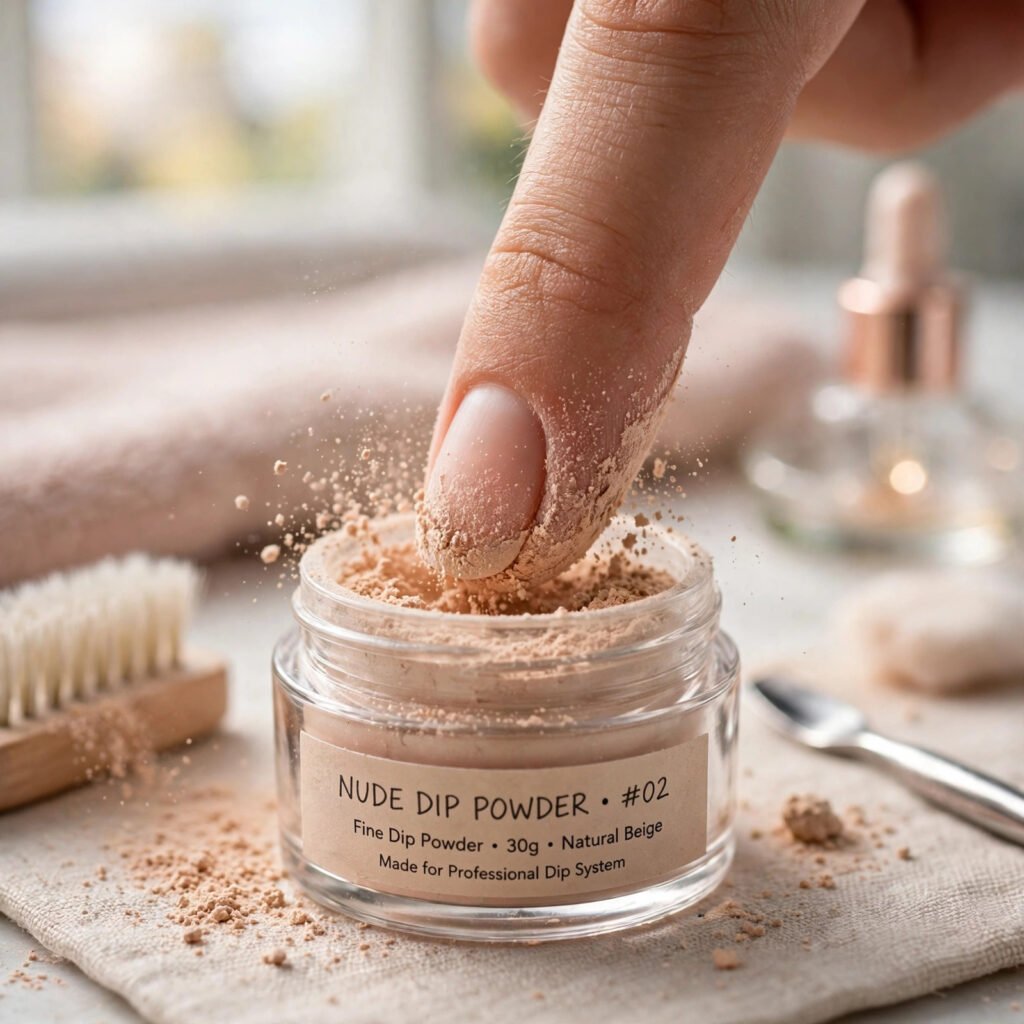
Dip powder, by contrast, is pigmented acrylic powder. You brush a resin base onto the nail, dip or pour fine acrylic powder over it, repeat for two or three layers, and seal it with an activator and top coat. No lamp is needed — the system hardens through a chemical reaction between the base resin and the activator. The result is essentially a thin acrylic nail: rigid, hard, and extremely protective. When I say dip is “acrylic in disguise,” that is not a slur — it is the chemistry. This is exactly why the dip powder vs acrylic comparison is so tight, and why my take on dip powder vs acrylic ended up declaring dip the slightly kinder sibling of the same family.
Why does the confusion matter? Because people walk into salons asking for “dip” expecting a gentle alternative to acrylic, or asking for “Gel-X” expecting something as hard as acrylic, and they get the wrong system for their needs. Dip is hard, rigid armor. Gel-X is flexible, lightweight coverage that moves with your nail. That single distinction — rigid versus flexible — predicts the winner of nearly every round in this comparison before I even run them. The rigid system lasts longer under abuse but concentrates stress at the edges; the flexible system feels natural but gives up sooner under heavy use. Keep that frame in mind and everything below will click.
Round 1: Longevity — Which Survives Real Life?
This is the question that started the whole article, so let me answer it with numbers from my own hands. My dip powder sets, done well at a salon with a proper apex, lasted four to five weeks with zero lifting — I pushed them past the salon’s recommended three weeks more than once, and the only reason I finally removed them was outgrowth, not failure. The edges stayed sealed, the surface stayed glossy, and through typing roughly eight hours a day, cooking, cleaning with gloves on (and, shamefully, a few times without), the sets just sat there, unbothered.
Gel-X on my hands lasted two and a half to three weeks before the first signs of trouble appeared. And “trouble” for Gel-X is specific: the seal at the cuticle edge, where the pre-shaped tip meets your natural nail, is the weak point. Because the tip is pre-formed and your nail is not a perfect match for it, the tech has to file the underside of the tip and blend it to your nail plate. If that blend is even slightly imperfect, water and oil creep in around day 14 to 18, and once lifting starts at the cuticle, it travels. On my middle finger — the one I use most on my phone — I had a Gel-X tip pop clean off at day 16 during a workout, no cracking, just a clean release at the seal.
But here is the nuance that matters: my lifestyle punished Gel-X specifically. I do reformer Pilates and lift weights, and the way a barbell presses into the underside of the free edge puts upward pressure on exactly that cuticle seal. If your hands live a gentler life — desk work, no heavy lifting, you actually wear gloves for dishes — three full weeks of Gel-X is realistic, and some people report four. Meanwhile dip’s rigidity makes it nearly indifferent to lifestyle. I have watched friends who are nurses, bartenders, and one very dedicated gardener wear dip for five weeks without a chip.
Fino Tip: If you are committed to Gel-X and want salon-dip longevity from it, ask your tech to do a “double seal” — a thin layer of builder gel or gel base brushed over the cuticle blend line and cured before polish goes on. I learned this from a tech in her third year doing Gel-X, and it took my wear time from 18 days to 24. It is the difference between the seal being one layer thick and two.
Day-by-day comparison on my hands: at day 7, both looked perfect, though Gel-X felt lighter. At day 14, dip looked identical to day 1; Gel-X showed slight outgrowth at the cuticle but no lifting on a good application. At day 21, dip was still going strong; Gel-X had one finger lifting and the rest nearing their limit. Removal day for dip was week four or five by choice; for Gel-X it was week three by necessity.
Best for: Dip powder wins this round outright — 4–5 weeks of hard-wearing life versus 2.5–3 for Gel-X. If your job or hobbies beat up your hands, dip is the clear answer.
Round 2: Damage & Nail Health
Longevity means nothing if your natural nails look like tissue paper when the set comes off, so this round matters more than most people think. I have removed both systems many times, and the difference in what is left underneath is dramatic.
Gel-X is, in my experience, the gentlest extension system currently available. The reason is structural: the soft-gel tip and the adhesive layer are both soak-off gel, which means removal is a warm acetone soak of about 15–20 minutes with minimal filing. My nail plates after a Gel-X removal look almost exactly like they did before application — smooth, same thickness, maybe slightly dry, fixed with a drop of cuticle oil. I wore Gel-X for three consecutive sets with one week off between each, and my nails needed no recovery period. No thinning, no white spots, no peeling. For nail biters and people growing out damage, this is the single most important paragraph in this article: Gel-X protects the natural nail while it grows, and takes almost nothing when it leaves.
Dip powder is a harder story. Because the system is essentially thin acrylic, removal requires filing down through the hard layers before soaking, and that filing step is where the damage happens — even in good salons. My nails after a dip removal were consistently thinner, with visible filing marks on the plate, and I needed a full week or two of bare-nail recovery before I felt good about another set. Some of that is technique: a tech who files gently leaves the plate mostly intact, and a rushed tech can take off half your nail with the dip. But even the gentlest dip removal is rougher than a Gel-X removal, because you are grinding through a harder material that sits directly on the nail plate.
There is also the ongoing-wear difference. Dip’s rigidity means that when you do catch a nail — on a car door, a drawer — the hard coating does not flex, so the force transfers to your natural nail underneath. I have seen dip nails cause painful breaks of the natural nail because the coating held while the nail did not. Gel-X, being flexible soft gel, absorbs that impact the way a natural nail would: the tip may crack, but the nail underneath usually survives. I learned this the hard way during my dip era — a jammed finger at the gym left me with a bruised nail bed under a perfectly intact dip coating, and that bruise took two months to grow out.
One more health note that rarely gets mentioned: dip powder’s hygiene question. Traditional dip application has the client dip their finger directly into a communal jar of powder. In a busy salon, that jar has seen dozens of hands. Reputable salons now pour the powder over the nail instead of dipping into the jar, but it is worth asking. Gel-X has no equivalent concern — everything comes from sealed bottles and fresh tips.
Best for: Gel-X wins nail health by a wide margin — gentler removal, no aggressive filing, flexible impact absorption, and no shared-powder hygiene question.
Round 3: Removal (The Part Nobody Warns You About)
Ask any nail tech what the real cost of a system is and they will tell you it is not the application — it is the removal. This is the round where Gel-X absolutely runs away with it, and it is not close.
Gel-X removal takes me about 20 minutes at home. File the shine off the top coat, soak cotton in acetone, wrap in foil, wait 15 minutes, and the soft gel slides off in soft sheets. I have a full walkthrough of the method in my guide to removing gel polish at home without damage, and the process for Gel-X is nearly identical — same soak, same gentle push-off, same oil afterward. Salon removal runs about $10–15 and takes 15 minutes. It is quick enough that I never once dreaded it.
Dip removal is a different animal. At home, you are looking at 45 minutes to an hour: file down the bulk of the hard layers first (this takes real elbow grease and a coarse file), then soak, then scrape, then file again for the stubborn spots. My first at-home dip removal took 70 minutes and left my nails so thin they bent when I pressed them — I did nearly everything wrong, and it still took that long. In a salon, dip removal runs $15–25 and takes 30–45 minutes, and here is the part nobody warns you about: many salons charge for dip removal separately, and some will not remove another salon’s dip at all. I have been turned away twice — once because the salon “didn’t do dip removals on sets we didn’t apply” and once because their e-file tech was out. You do not get turned away for a Gel-X removal anywhere that does gel, because every gel salon already owns acetone and foil.
There is also the in-between problem: what happens when one nail fails early. With Gel-X, a popped tip can be replaced in a single 10-minute salon visit or even at home if you own a lamp — the tip just goes back on. With dip, a cracked or lifted nail usually means filing the whole thing down and re-dipping that finger, which takes as long as a mini-appointment. Over the life of a year of manicures, the removal and repair time difference between these two systems is genuinely measured in hours.
Fino Tip: Never, ever peel or pry off a lifting dip nail “just to get it over with.” I did this once on a road trip and took a layer of my nail plate with it — that nail peeled and split for three months. If a dip nail is lifting and you cannot get to a salon, file the lifted edge smooth, cover it with a bandage, and wait. Your future nails will thank you.
Best for: Gel-X, decisively — 15–20 minute gentle soak-offs versus 45+ minutes of filing and soaking for dip, plus dip’s separate removal fees and the occasional salon refusal.
Round 4: Cost & Salon Time
Let me talk money, because both systems advertise themselves as affordable and the real numbers tell a more complicated story. These are US salon prices from 2026 — my own receipts plus what readers have reported to me — and they will vary by city, but the ratios hold.
A full Gel-X set with gel polish runs $55–$85 at most salons, with fills not really being a thing — Gel-X is a full replacement system, so every 2.5–3 weeks you pay for a whole new set. Removal is usually $10–15 extra if you do not do it at home. So a year of Gel-X at 3-week intervals: roughly 17 sets at ~$70 average plus removals, landing around $1,300–$1,500 per year if you have the salon do everything.
A dip powder full set runs $40–$65, cheaper up front — and here is dip’s quiet superpower: because it lasts 4–5 weeks, you go less often. Ten to twelve sets a year at ~$52 average puts a year of dip around $550–$750, roughly half the cost of Gel-X over twelve months. Even adding dip’s pricier removals ($15–25), dip stays comfortably cheaper long-term because the longer wear interval does all the heavy lifting. This is the honest answer to the cost question: Gel-X looks similarly priced per visit, but dip wins the year by a mile.
Salon time follows the same pattern. A Gel-X application takes 60–90 minutes — the tip sizing, blending, and curing are fiddly, skilled work. Dip takes 45–60 minutes once the tech is in rhythm. Over a year, dip’s fewer visits also mean fewer hours in the chair: roughly 10 hours of appointment time for dip versus 25+ for Gel-X. If your schedule is the constraint rather than your wallet, that difference is real.
DIY flips the math for Gel-X. A starter Gel-X kit — lamp, tips, gel adhesive, a few polishes — costs $60–$100 and pays for itself in two sets. I did my own Gel-X for two months and got genuinely good results after a learning curve of about three sets. DIY dip is possible but messier and harder to get right: the powder goes everywhere, the activator fumes are strong, and a lumpy apex is much harder to fix at home than a crooked gel tip. So if you are the DIY type, Gel-X’s total cost of ownership drops dramatically while dip’s stays salon-bound for most people.
Best for: Dip wins for salon-goers — about half the annual cost thanks to longer wear intervals. Gel-X wins for DIYers, where a starter kit pays for itself in two sets.
Round 5: Looks, Shapes & Versatility
This is the round where personal taste finally gets a vote, and it is also where my own preference shows. Both systems can look beautiful. They do not look beautiful in the same way.
Gel-X looks like the best version of natural nails. Because the extension is soft gel and the surface is gel polish, the finish is glossy, slightly flexible, and — crucially — thin at the cuticle. A well-done Gel-X set has that seamless grow-out where you cannot tell where your nail ends and the extension begins. The pre-shaped tips come in every modern shape — almond, coffin, stiletto, squoval — and the shapes are consistent, because they are manufactured, not sculpted freehand. If you have ever had a salon sculpt one almond nail and one almost-almond nail in acrylic, you know why manufactured consistency matters. My Gel-X sets photographed better than any other system I have worn; the light hits soft gel differently, with a depth that powder systems struggle to match.
Dip looks like armor — in the best sense. The finish is hard, glassy, and substantial. On short to medium lengths, dip looks fantastic: clean, strong, opaque color with real depth. Where dip struggles is length and shape finesse. Because the powder builds in layers over your natural nail or a tip, very long dip nails can look thick and bulky at the free edge — the “dip chicklet” effect, where each nail looks like a little tile. A skilled tech avoids this with careful filing, but it is a structural tendency of the system, not just bad technique. Intricate nail art is also harder over dip: the textured powder surface does not take fine hand-painted detail as cleanly as gel does. If your dream set is long stiletto nails with delicate line art, Gel-X will serve you better. If your dream set is a perfect opaque red almond at medium length that survives your life, dip is superb.
Color selection is a genuine dip advantage. Dip powder comes in hundreds of pigmented shades, including glitters and chromes mixed right into the powder — the color IS the structure, so it never chips to reveal something underneath. Gel-X relies on gel polish on top, which means chipping reveals the nude tip below. In practice, though, I found Gel-X’s gel polish chipped less than expected because the flexible tip absorbs impact instead of cracking the polish layer.
One more versatility note: Gel-X tips can be soaked off and the natural nail underneath is immediately ready for a different system. I have gone Gel-X → bare → dip → Gel-X across seasons with no drama. Dip-to-anything transitions usually require a recovery week because of the filing involved. If you like changing systems with the seasons, Gel-X is the better citizen.
Fino Tip: For Gel-X, flash-cure each nail for 5–10 seconds immediately after pressing the tip on, before moving to the next finger — do not wait to cure the whole hand at once. I skipped this my first DIY set and two tips drifted sideways while I worked, leaving them crooked for three weeks. Flash-curing locks the placement while the gel is still workable, and it is the single biggest difference between amateur and salon-quality Gel-X.
Best for: Gel-X for natural-looking length, modern shapes, and intricate art. Dip for rich opaque color, glitter depth, and a bulletproof finish at short-to-medium lengths.
My Verdict: Which Should You Choose?
After wearing both systems long enough to know their failure modes by heart, here is how I actually decide — and how you should too. Forget which one is “better” in the abstract. The right system is the one that matches your life.
Choose dip powder if: your hands work hard — nursing, bartending, retail, parenting toddlers, weightlifting, gardening — and you want a set you can forget about for a month. Choose dip if budget matters and you want the lowest annual cost from a salon. Choose dip if you love rich, opaque color and glitter, and you keep your nails short to medium. Dip is the workhorse: less pretty in motion, more reliable in battle.
Choose Gel-X if: nail health is your priority — you are growing out damage, you are a nail biter, or you simply never want to feel your nails thinning again. Choose Gel-X if you change your set often and dread long removals. Choose Gel-X if you want long, elegant shapes or intricate nail art that needs a smooth gel canvas. Choose Gel-X if you are DIY-curious, because it is the most home-friendly extension system I have ever used. Gel-X is the thoroughbred: more beautiful, more delicate, needs more attention.
Here is my recommendation matrix for the specific lifestyles I hear about most. Office worker who types all day: Gel-X — light, comfortable, and three weeks is a natural rhythm. Gym-goer who lifts: dip — Gel-X’s cuticle seal will not survive barbell pressure. Budget-conscious salon-goer: dip — half the annual cost. Nail biter growing out: Gel-X, no contest — the gentle removal means you keep every millimeter you grew. Bride or event: Gel-X for the photos, applied a week before so any early lifting shows up in time for a fix. Chronic set-changer who gets bored: Gel-X — fast removal means a new look every three weeks without the guilt.
My personal pick? I wear Gel-X most of the year because my work is keyboard-based and I value my nail health, and I switch to dip for the two months a year when I am traveling or doing house projects and cannot afford a salon visit every three weeks. There is no rule that says you marry one system. The most honest advice in this whole article: match the system to the season of your life, not to an identity. If you want the deeper dive on Gel-X specifically, my complete Gel-X nails guide walks through the whole system, and if you are comparing within the acrylic family, my Gel-X vs acrylic comparison covers that pairing head-to-head.
Mistakes to Avoid
I made most of these so you do not have to. Every one of them cost me either money, nail health, or a week of ugly nails.
Choosing Gel-X from a tech who just learned it last week. Gel-X looks easy and is brutally technique-dependent — tip sizing, underside etching, the cuticle blend, flash-curing. My worst Gel-X set came from a salon that had “just added Gel-X to the menu.” Three tips popped in ten days. Ask how long the tech has been doing Gel-X specifically, and look at healed photos, not fresh ones. Anyone’s fresh set looks good; day-14 photos tell the truth.
Getting dip over already-thin nails without a break. Dip on compromised nails is how peeling cycles start: the removal filing takes a little more each time, the nail gets thinner, the next set lifts sooner, the removal takes more. If your nails are paper-thin, do one round of Gel-X or go bare with builder gel (BIAB) as a protective overlay for a month first. I ignored this advice from my own tech once and paid for it with a full grow-out.
Picking dip for very long lengths. The bulk problem is real. Dip over long extensions tends toward the chicklet look unless your tech is exceptional at filing the free edge thin. If you want long nails, Gel-X’s manufactured tips keep the profile slim. This was my $65 lesson: long dip coffin nails that looked great in the salon chair and chunky in every photo afterward.
Soaking dip off without filing first. Pure acetone cannot penetrate three layers of cured acrylic powder efficiently. You will sit there for an hour getting nowhere and then get impatient and peel. Always file off the shine and at least half the bulk before the foil goes on. This single step cuts dip removal time nearly in half.
Assuming “dip is natural” or “Gel-X never damages.” Dip is acrylic powder — it is not a natural or organic product despite the earthy marketing some salons use. And Gel-X can damage nails if the tech over-files the natural plate during prep or if you rip a tip off. No system is damage-free; the question is always how much skill stands between you and the damage.
Ignoring the outgrowth timeline. Dip at week five has nearly half an inch of outgrowth on fast-growing nails, and the weight distribution shifts — that is when painful breaks happen. Gel-X at week four looks tired and the seal is compromised. Set a calendar reminder for removal day when you leave the salon. Your nails do not have a snooze button.
FAQ
Can you do dip powder over Gel-X tips?
Technically yes, and some techs do it as a hybrid — Gel-X tip for the length and shape, dip powder over the top for bulletproof hardness. I have tried it once. Honestly? It combines the weaknesses more than the strengths: you get dip’s difficult removal on top of Gel-X’s technique-dependent application, and the rigid dip layer defeats the flexibility that makes Gel-X comfortable. If you want dip’s durability, just get dip on a tip. If you want Gel-X’s gentleness, keep it all gel. The hybrid exists, but I would not pay extra for it.
Which is cheaper long-term?
Dip powder, by roughly half. A year of salon dip runs about $550–$750 because each set lasts 4–5 weeks, while a year of salon Gel-X runs $1,300–$1,500 with new sets every 2.5–3 weeks. The exception is DIY: a Gel-X starter kit pays for itself in two sets, which flips the math for home users. My full breakdown is in Round 4 above.
Which is better for nail biters?
Gel-X, and it is not close. Nail biters need length that protects the free edge while the natural nail grows underneath, plus removal gentle enough not to destroy the progress. Gel-X delivers both. Dip’s aggressive removal filing can undo weeks of growth in one appointment. I have watched two friends grow out lifelong biting habits under Gel-X; neither could have done it under dip.
Does Gel-X or dip powder smell worse in the salon?
Dip, noticeably. The activator and resin have a sharp chemical smell that fills the manicure table area. Gel-X has the mild scent of gel products and no monomer fumes at all. If you are sensitive to smells — or pregnant, when many people become sensitive — Gel-X is the more comfortable appointment. Neither requires the heavy ventilation that traditional acrylic demands.
Can I switch from dip to Gel-X without a break?
Usually yes, with one condition: your nails need to survive the dip removal first. If the removal leaves your plates reasonably intact, Gel-X can go straight on — its gentle prep is actually a kindness to post-dip nails. If the removal was rough and your nails are thin and peeling, give them one to two weeks bare with cuticle oil before any new system. Forcing a new set onto compromised nails is how lifting and breakage cycles begin.



Pingback: BIAB vs Acrylic: Which Is Better? (2026)