
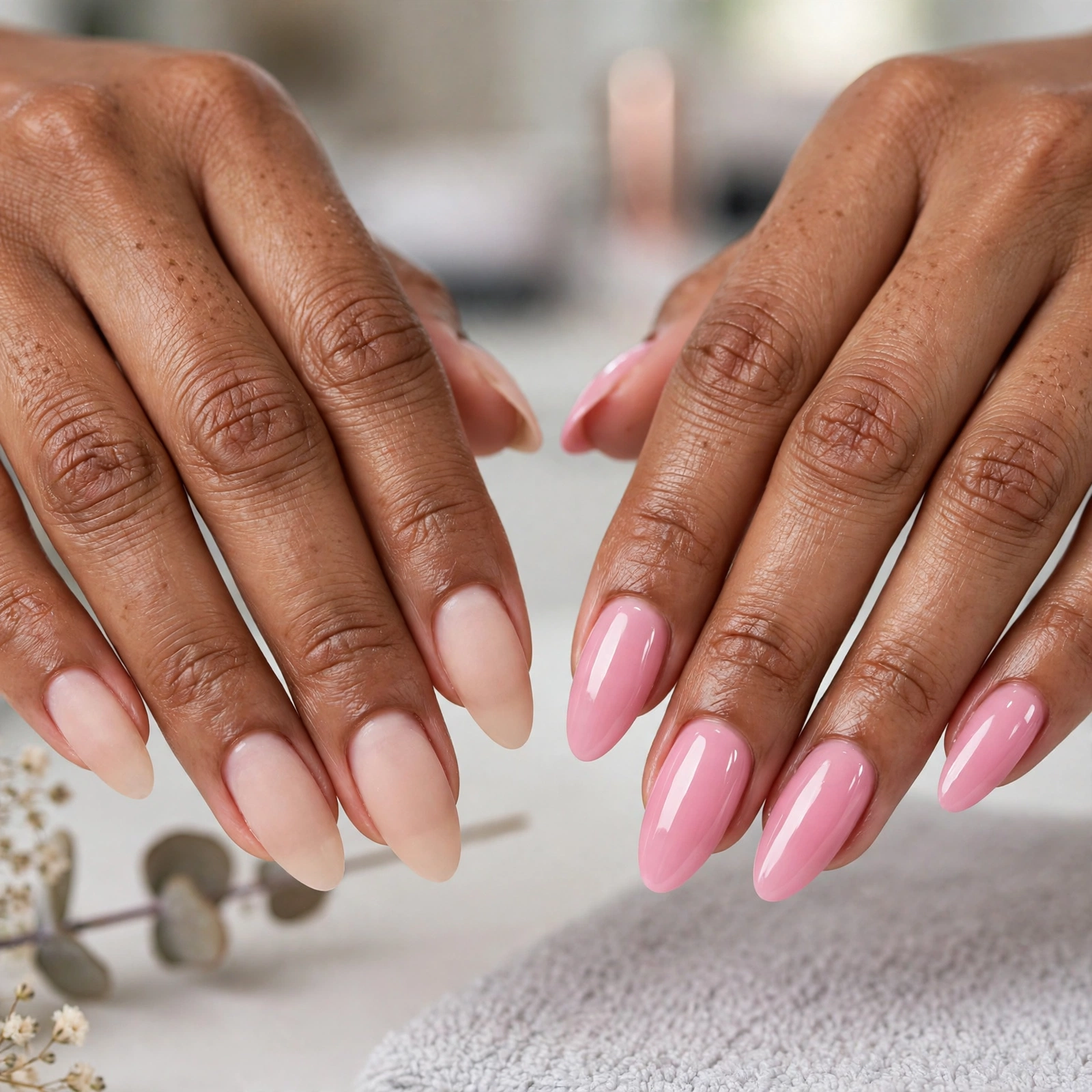
If there’s one question I get asked more than any other, it’s this: Gel-X or acrylic — which is actually better? I’ve now worn both systems extensively — multiple full sets of each, through workouts, typing marathons, dish duty, and one memorable incident involving a car door — and I have opinions. Strong ones. This isn’t a sponsored comparison or a salon brochure; it’s what I genuinely think after living in both. Short version: they’re both excellent at different things, and the right choice depends entirely on your nails, your lifestyle, and what you value most. Here’s the full honest breakdown.
In This Article
- Gel-X vs acrylic: the quick verdict
- What Gel-X actually is (and isn’t)
- What acrylic actually is (and isn’t)
- The head-to-head comparison: 10 categories
- Which one I personally choose (and why)
- Mistakes to avoid with both systems
- FAQ
Gel-X vs acrylic: the quick verdict
For readers in a hurry: choose Gel-X if you want the most natural-looking, lightest-feeling extensions with the least damage to your natural nails — it’s the modern system, and for most people in 2026, it’s the better default. Choose acrylic if you need maximum strength and length, if you’re rough on your hands, or if budget matters most — acrylic remains the workhorse of the nail world for good reason. I’ve worn Gel-X for everyday life and switched to acrylic exactly twice: once before a two-week trip with no salon access, and once when I wanted extreme length for an event. That pattern tells you most of what you need to know about how I actually rank them.
This comparison sits alongside my other head-to-head guides — dip powder vs acrylic, dip powder vs gel, and acrylic vs gel — and readers tell me the “vs” format is what finally helps them decide. If you’re completely new to extensions, my complete Gel-X guide covers that system in depth; this article is the decision-maker’s version.
What Gel-X actually is (and isn’t)
Gel-X is a soft-gel extension system: pre-shaped full-coverage tips made of soft gel are adhered to your natural nail with gel, then cured under a lamp. The whole extension — tip and overlay — is gel, which means it soaks off in acetone like gel polish rather than needing to be filed down aggressively. It was developed as the answer to acrylic’s biggest complaints: the harsh monomer smell, the heavy feeling, and the damage from aggressive fills and removals. Having worn it for months at a time, I can confirm it delivers on all three promises — my salon visits genuinely smell like nothing now, which still surprises me after years of acrylic fumes.
What Gel-X isn’t: it isn’t indestructible, it isn’t the cheapest option, and it isn’t available everywhere yet. The tips come in pre-set shapes and sizes, so extreme customisation is limited compared to sculpted acrylic. And because the system is newer, not every salon offers it — I had to try three salons before finding a tech who did Gel-X well. It also isn’t a DIY-friendly system for beginners despite what social media suggests; the application needs a lamp, the right gel adhesive, and proper prep, or the tips pop off within days. I learned that the expensive way with a home kit that lasted exactly four days.
One more thing Gel-X isn’t: a separate chemical universe from gel. If your nails react badly to gel polish (allergies to certain acrylates are real and increasingly common), Gel-X uses the same family of chemistry, so patch-test first. This is the conversation more people should have with their techs, and almost nobody does.

What acrylic actually is (and isn’t)
Acrylic is the original nail extension system: a liquid monomer and powder polymer combine into a bead that’s sculpted onto the nail (over a tip or a form) and hardens in air. It’s been around for decades, every salon on earth offers it, and it remains the strongest, most customisable extension system available. Sculpted acrylic can achieve lengths and shapes — extreme stilettos, edge nails, architectural designs — that no pre-formed system can match. When I wanted the longest, most dramatic set of my life for a wedding, acrylic was the only system my tech would even consider.
What acrylic isn’t: it isn’t gentle, it isn’t odour-free, and it isn’t the modern default anymore. The monomer smell is genuinely strong — I’ve had headaches from poorly ventilated salons, and it’s the number-one complaint I hear from acrylic wearers. Removal is harsher than Gel-X: acrylic must be filed down substantially before soaking, and aggressive filing is where most acrylic damage actually happens. It’s also heavier on the nail — you feel acrylic in a way you simply don’t feel Gel-X, and for the first few days of a fresh set I’m always aware of the weight.
What acrylic also isn’t: automatically damaging. The “acrylics ruined my nails” story is almost always a story about bad application or bad removal — over-filing the natural nail, prying off lifting sets, skipping fills until the structure fails. My first-time acrylic guide covers how to avoid all of that. Done right, by a skilled tech, acrylic is perfectly safe for long-term wear. The system’s reputation problem is a technician problem, not a chemistry problem.
The head-to-head comparison: 10 categories
1. Natural look. Gel-X wins, and it’s not close. Because the tips are thin soft gel with a natural apex built in, Gel-X sets look like your nails but better — the cuticle area is seamless in a way sculpted acrylic rarely achieves. Acrylic can look natural in skilled hands, but the tell-tale thickness at the stress point gives it away. If “nobody should know they’re extensions” is your goal, Gel-X is the answer.
2. Strength and durability. Acrylic wins. It’s simply the harder, more rigid system — it withstands impacts, longer lengths, and rougher lifestyles. My Gel-X sets survive normal life beautifully, but the car-door incident that merely scuffed an acrylic set would have cracked Gel-X. If you’re hard on your hands, acrylic’s toughness is real insurance.
3. Feel and comfort. Gel-X wins by a mile. It feels like nothing — I forget I’m wearing extensions within a day. Acrylic has a noticeable weight and rigidity, especially in the first week. This is the category that converts the most acrylic loyalists: once you’ve felt Gel-X’s lightness, going back feels like wearing armour.
4. Damage to natural nails. Gel-X wins. Soak-off removal is dramatically gentler than acrylic’s file-down-and-soak process, and there’s no e-file grinding near your nail bed during fills — because Gel-X doesn’t get filled, it gets replaced. My natural nails after six months of Gel-X looked better than after six months of acrylic, full stop. That said, see my note above: good acrylic application minimises damage enormously.
5. Longevity. Acrylic wins on raw lifespan — a well-done acrylic set lasts 3–4 weeks between fills, and the system is designed for indefinite maintenance. Gel-X lasts 2–3 weeks and then gets fully removed and replaced; there’s no fill option. Over a year, that means more full appointments with Gel-X. My acrylic longevity guide has my real fill schedule if you’re considering the long game.
6. Cost. Acrylic wins, usually significantly. A full acrylic set runs cheaper than Gel-X in most markets, and fills are cheaper than full Gel-X replacements. Over a year of continuous wear, the cost difference is substantial — potentially hundreds. If budget is a primary factor, acrylic is the pragmatic choice.
7. Salon availability. Acrylic wins — every salon does acrylic; Gel-X availability is still patchy, especially outside major cities. This is a practical consideration that decides the question for a lot of people: the best system is the one your trusted tech actually offers and does well.
8. Odour and salon experience. Gel-X wins enormously. No monomer fumes, no headache, no holding your breath. If you’re sensitive to smells, pregnant, or just hate the chemical salon atmosphere, this alone can be the deciding factor. My Gel-X appointments feel like spa visits; my acrylic appointments felt like chemistry class.
9. Shape and length options. Acrylic wins for extremes — sculpted acrylic can do anything. But here’s the nuance: Gel-X’s pre-shaped tips now cover almond, coffin, square, stiletto, and more in multiple lengths, which handles 95% of what people actually want. Unless you’re after avant-garde lengths, Gel-X’s menu is sufficient. Check my coffin shape guide if you’re deciding on shape — it applies to both systems.
10. Removal. Gel-X wins. Twenty minutes of soaking and the tips slide off; my natural nails underneath look almost untouched. Acrylic removal is a 45-minute affair involving filing, soaking, more filing, and usually some nail thinning no matter how careful the tech is. If you’ve ever dreaded the removal appointment, Gel-X will feel like a revelation.
Fino Tip: Score it yourself: give 2 points to the winner of each category that matters to you personally, 1 point for categories you don’t care about. Most people find Gel-X wins 6–7 categories that matter to them — but if strength, cost, and availability are your top three, acrylic wins your personal ranking. The “right” answer is personal, not universal.
Which one I personally choose (and why)
After all of this, here’s my honest personal ranking: I wear Gel-X about 80% of the time. The lightness, the natural look, the gentle removal, and the odour-free appointments add up to a system that fits my actual life — I type all day, I do my own dishes, I want nails that look like the best version of my own. The 2–3 week replacement cycle doesn’t bother me because I enjoy the fresh-set feeling, and I’ve budgeted for it.
I switch to acrylic for specific missions: travel longer than three weeks with no salon access (acrylic’s longevity wins), extreme length for events, and — honestly — when my budget is tight for a few months. There’s no shame in the pragmatic choice. I also think beginners should know that a bad Gel-X tech is worse than a good acrylic tech: the system’s gentleness assumes correct application, and a poorly prepped Gel-X set lifts within days. The tech matters more than the system, which is the sentence I’d put in bold if I could only keep one from this entire article.
If you’re choosing between these two and also considering dip powder, my dip vs acrylic and dip vs gel comparisons complete the triangle — the three guides together cover every common decision. And if you’re removing any system at home, please read my safe gel removal method first; most extension damage I see comes from removal, not wear.
Mistakes to avoid with both systems
The biggest mistake with Gel-X is treating it like acrylic — using your nails as tools, picking at lifting edges, or waiting too long between replacements. Gel-X is strong for its weight, but it’s not acrylic-strong; prying open cans and scraping labels will pop tips. When you feel a tip lifting, get it fixed promptly — water trapped under a lifting tip is how greenies (bacterial discolouration) happen.
The biggest mistake with acrylic is staying loyal to a bad tech out of habit. Rings of fire (over-filed nail beds), constant lifting, allergic reactions to cheap monomer — these are tech problems, and the solution is a new tech, not a new system. I stayed with a mediocre acrylic tech for a year out of loyalty and my nails paid for it; switching techs did more for my nail health than switching systems ever did.
The universal mistake is DIY removal by force. Peeling, prying, or biting off either system tears layers of your natural nail with it — I did this once in my early twenties and my thumbnail had a visible dent for six months. Soak-off takes patience but preserves the nail. Whatever system you choose, promise me you’ll never peel.
FAQ
Is Gel-X better than acrylic? For most people in 2026, yes — Gel-X looks more natural, feels lighter, smells like nothing, and removes far more gently. But acrylic remains stronger, cheaper, more customisable, and more widely available. The best system depends on your priorities: natural look and nail health favour Gel-X; strength, length, and budget favour acrylic.
Does Gel-X ruin your nails? Less than acrylic, when applied and removed correctly. The soak-off removal is the key advantage — there’s no aggressive filing of the natural nail. But poor prep or forced removal can damage nails with any system. Choose a tech who specialises in Gel-X, not one who “also does” it.
How long does Gel-X last compared to acrylic? Gel-X lasts 2–3 weeks before needing full replacement; acrylic lasts 3–4 weeks between fills and can be maintained indefinitely. Acrylic wins on longevity, but Gel-X’s replacement appointment is gentler than acrylic’s fill cycle.
Is Gel-X more expensive than acrylic? Usually yes — both the initial set and the ongoing maintenance cost more, because Gel-X requires full replacement rather than fills. Over a year of continuous wear, expect to pay noticeably more for Gel-X.
Can I switch from acrylic to Gel-X? Absolutely, and it’s a common switch. Have the acrylic professionally removed (never peeled), give your natural nails a week or two to recover with cuticle oil and a strengthener if they’re thin, then start Gel-X on a healthy base. Many of my readers made exactly this switch after reading my nail recovery plan.


Pingback: Acrylic Tips vs Full Set: Which Lasts Longer?