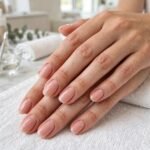
Here is the question I get asked more than any other at the salon table, in my comments, and honestly in my own head every time I sit down for an appointment: BIAB or Gel-X? People use a whole tangle of names for both, so let me untangle that first. BIAB, builder gel, and builder in a bottle all describe the same idea — a thick, soak-off gel that is brushed onto your natural nail to strengthen it, add a little structure, and let it grow long without snapping. Gel-X, soft gel extensions, and full-cover soft gel tips describe the other side — a pre-shaped, full-cover tip made of soft gel that is glued onto your natural nail and then cured, giving you instant length without sculpting from scratch. I have worn both for months at a time, I have removed both badly and well, and I have paid for both in salons and tried both at home. This is the honest comparison I wish someone had handed me before I spent money on the wrong one for my lifestyle.
In This Article
- What BIAB Actually Is (and What It Isn’t)
- What Gel-X Actually Is
- Durability and Wear Time
- Length and Shape Options
- Look and Feel
- Application Time and Salon Experience
- Removal: The Part Nobody Warns You About
- Nail Health Impact
- Cost: Salon and At Home
- My Verdict: Which I Choose for Which Person
- Mistakes to Avoid
- Frequently Asked Questions
What BIAB Actually Is (and What It Isn’t)
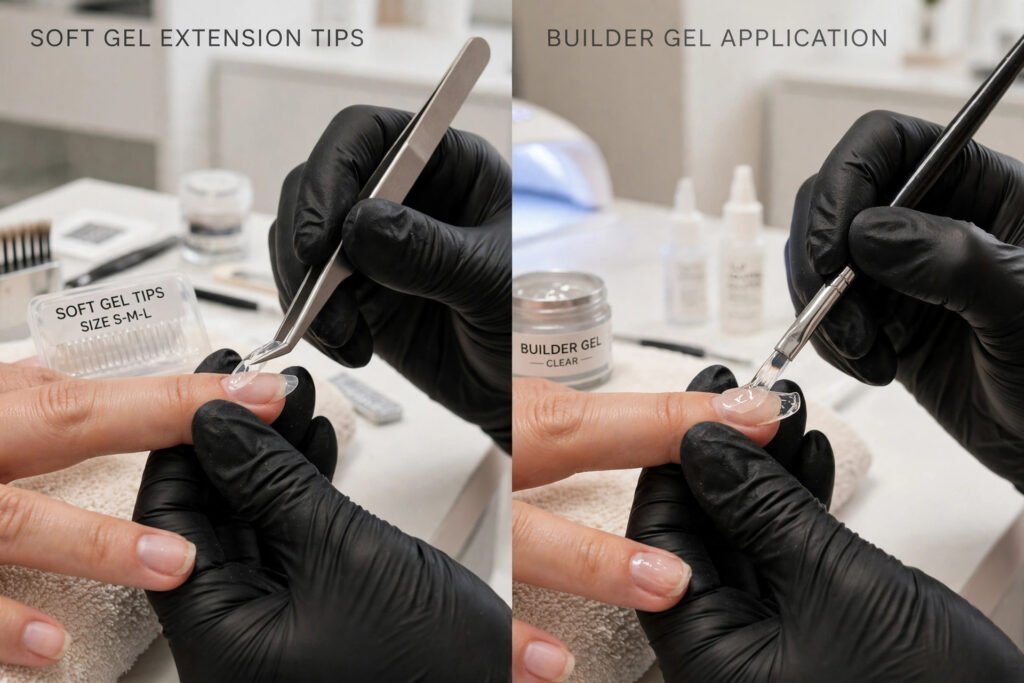
BIAB is not an extension system in the traditional sense, and that misunderstanding causes half the disappointment I hear about it. When I first booked BIAB, I walked in expecting to leave with long nails. I left with my own nails, slightly thicker, slightly glossier, and exactly the same length they were when I walked in. BIAB is a builder gel in a bottle — a thicker, stronger cousin of regular gel polish that your technician brushes on in layers, building a small apex over the stress area of the nail so the free edge stops bending and breaking. It cures under a lamp like any gel, it can be worn alone as a sheer, milky, or nude finish, or it can be painted over with colour. What it does brilliantly is turn weak, bendy, peeling nails into nails that can actually survive daily life long enough to grow. What it does not do is give you instant length. If your nails are bitten short or you broke three of them the day before a wedding, BIAB alone will not rescue you, and any salon that promises otherwise is overselling it. My own turning point came after about six weeks of BIAB infills: my nails, which had never grown past my fingertips without splitting, finally had enough structure to reach a length I actually liked. That slow build is the whole point, and once I understood that, I stopped being disappointed and started being a genuine fan.
I learned the foundations properly when I first read a detailed breakdown of the system, and if you are new to it, this guide to builder gel and BIAB explains the shades, the infill cycle, and who it suits best. Best for: anyone whose main goal is growing out their own nails stronger, rather than getting instant long extensions tomorrow.
What Gel-X Actually Is
Gel-X is the opposite philosophy, and I love it for completely different reasons. Instead of building strength layer by layer onto your own nail, your technician selects a pre-shaped soft gel tip in your size, applies a thin layer of gel adhesive, presses the tip onto your natural nail, and cures it under a lamp. There is no sculpting, no forms, no acrylic powder, and no heavy filing of a hard extension. The first time I had Gel-X, I was genuinely startled by how fast it was — I went from short, uneven nails to a neat medium almond set in well under an hour, and they looked like they had grown that way. Because the tips come in set shapes and lengths, the result is extremely consistent: all ten nails match, the curve is even, and the finish is smooth from the first day. The trade-off is that you are wearing a full-cover tip, so your natural nail underneath is not really doing the growing work in the same way. When you remove Gel-X, you are back to your starting length, and if you loved the long look, you will want another full set rather than an infill. For a full walkthrough of shapes, lengths, and what to ask for at your appointment, this complete Gel-X nails guide covers the details I wish I had known before my first set.
The other thing nobody told me before my first Gel-X set is how light they feel compared with acrylic. I had spent years assuming all extensions feel heavy and thick, and Gel-X genuinely changed that assumption for me. Best for: anyone who wants instant, even length for an event, a holiday, or a fresh start while their natural nails recover underneath.
Durability and Wear Time
On durability, I have to be honest: both systems last well, but they fail in different ways, and knowing the failure mode matters more than the headline number of weeks. My BIAB sets consistently lasted three to four weeks before I needed an infill, and the wear was gradual — a little growth at the cuticle, a little dullness at the tips, but rarely a dramatic break. When BIAB did chip, it was usually at a corner after I had used my nails as tools, which I know I should not do, and the damage stayed local rather than lifting the whole nail. Gel-X, in my experience, lasted a similar three to four weeks, sometimes a full four with careful wear, but when a Gel-X nail failed, it tended to fail completely — a tip popping off whole, usually after hot water, steam, or a knock that flexed the tip away from the natural nail. That pop-off is not painful the way a broken acrylic can be, but it is inconvenient, especially if you are away from your salon. I also noticed that Gel-X held up better to length: a long BIAB nail is still your own nail, so it can bend and snap under pressure, while a Gel-X tip distributes that pressure more evenly. If you type all day, garden, or work with your hands, BIAB wins for everyday resilience on shorter lengths. If you want medium to long nails that stay looking perfect for a special few weeks, Gel-X wins, provided you are willing to accept the occasional whole-tip loss rather than a small chip.
Fino Tip: Whatever system you choose, never peel a lifting edge to test it. Peeling turns a small lift into a torn layer of your natural nail, and that damage follows you into your next three sets.
Length and Shape Options
Length is where the two systems genuinely diverge, and it is the question I tell people to answer before anything else. BIAB works with what you have. If your nails are already a decent length, BIAB can preserve and enhance that length beautifully, and you can shape them into almond, oval, squoval, or a soft square as they grow. But BIAB cannot create length out of nothing, and it cannot hold an extreme stiletto or a very long coffin on a short nail bed without that nail bending under its own leverage. Gel-X, by contrast, starts from the tip catalogue: short, medium, long, and extra-long, in almond, coffin, stiletto, square, and round, all ready to apply. I have worn a medium almond Gel-X set that looked identical on every finger, something my natural nails have never managed on their own because two of my nails grow with a slight curve. That consistency is a real advantage if symmetry matters to you for photos, events, or work. The limitation is that you are choosing from existing tip shapes rather than having a nail sculpted exactly to your finger, so if you have a very curved, very flat, or unusually narrow nail bed, your technician may need to adapt the tip or suggest a different approach. For most people, though, the range is more than enough, and the ability to go from short to long in one appointment is Gel-X’s clearest superpower.
Best for: BIAB for natural, growing length and subtle shaping; Gel-X for instant, uniform length and dramatic shapes.
Look and Feel
Side by side, the two systems look surprisingly similar at first glance, and that is why so many people struggle to choose from photos alone. BIAB, worn on its own, has a soft, plump, natural look — the nail looks thicker and healthier, with a gentle apex that catches the light, but it still looks like your nail, just better. Under colour, BIAB gives a smooth, even base that makes sheer and milky shades look especially expensive, because there is no tip line and no visible join. Gel-X looks a fraction more polished and perfect, almost like a press-on done flawlessly, because the tip itself is manufactured to a consistent curve and thickness. In terms of feel, BIAB feels like your own nails with a protective coat: flexible, warm, and easy to forget about. Gel-X feels slightly more present, especially in the first day, because there is a tip sitting over your whole nail plate, but I found I stopped noticing it within a day, and it never felt as heavy or rigid as acrylic did on me. Where I notice the difference most is at the cuticle as the set grows out. BIAB grows out like gel polish, with a visible but soft regrowth line. Gel-X grows out with a more defined step where the tip meets the new nail, which can look less natural by week three if you wear a sheer shade. With an opaque colour, honestly, nobody can tell either way, and that is the version most of us actually wear.
Application Time and Salon Experience
If you hate sitting in the salon chair for hours, this section will probably decide it for you. A BIAB appointment, including prep, application, and colour, usually takes me around an hour to an hour and a quarter, and an infill is often quicker because there is no full removal and no tip fitting. The process is calm and methodical: prep, dehydrate, base, build the apex layer by layer, cure, colour, top coat. There is very little dust, very little filing, and very little of the chemical smell I associate with acrylic appointments. Gel-X is often even faster for a full set, because the tips are pre-made — my fastest Gel-X appointment was under an hour including colour, and that speed is a genuine quality-of-life win if you book appointments around work or childcare. The fitting step matters, though: a good technician will take time sizing each tip, and you should not rush that part, because a tip that is too narrow will pinch and a tip that is too wide will lift at the sidewalls. I have learned to speak up during sizing rather than politely accepting a tip that feels tight, because ten minutes of careful fitting saves two weeks of discomfort. Both systems are far more pleasant than a traditional acrylic appointment in my experience, but Gel-X edges ahead on speed for a brand-new long set, while BIAB edges ahead on speed and simplicity for ongoing maintenance.
Best for: Gel-X if you want a fast full transformation in one visit; BIAB if you want the quickest, lowest-fuss regular maintenance routine.
Removal: The Part Nobody Warns You About
Removal is where I have made my worst mistakes, so let me be blunt: both systems are soak-off, and both will damage your nails if you rip them off. BIAB removal is straightforward but slow — the top coat is gently buffed, the nails soak in acetone, and the softened gel is pushed off, usually in about twenty to thirty minutes in the salon. Because BIAB is applied in layers onto your own nail, a careful removal leaves your natural nail intact and ready for the next set, which is why so many people stay on BIAB for months without a break. Gel-X removal is also a soak-off, but you are soaking off a full tip plus adhesive, so it can take a little longer and can feel more involved, especially if the tips were applied with a thicker layer of gel. I once tried to remove Gel-X at home by picking at a lifted corner while watching television, and I took a thin layer of my natural nail with it on two fingers. Those two nails peeled for weeks afterwards, and it was entirely my own fault. If you are going to remove either system at home, follow a proper soak-off method rather than improvising, and this guide to removing gel polish at home safely lays out the soaking, wrapping, and gentle push-off steps that protect the nail plate. In the salon, both removals are comfortable and routine; at home, patience is the whole technique, and rushing is the damage.
Fino Tip: Book your removal appointment before you actually need it. The people who damage their nails are almost always the people who got impatient waiting for a slot and started picking.
Nail Health Impact
For nail health, BIAB is the system I recommend most often, and I say that as someone who genuinely loves Gel-X too. BIAB protects the nail while it grows: the thick gel layer acts as a shield against water, bending, and everyday knocks, and because infills do not require a full removal each time, your nail plate is not repeatedly soaked, buffed, and re-prepped. Over three months of consistent BIAB, my nails went from peeling at the free edge every single week to growing with a smooth, intact edge, and that change alone convinced me. Gel-X is not damaging when it is applied and removed properly, and because there is no heavy filing of the natural nail and no harsh monomer, it is far gentler than acrylic. But it does involve a full removal and reapplication each time you want a fresh set, which means more acetone exposure and more prep cycles than a BIAB infill routine. It also hides your natural nails completely, so you can miss early signs of weakness, dryness, or lifting until removal day. If your nails are already weak, splitting, or recovering from acrylic damage, I would start with BIAB and let them rebuild. If your nails are healthy and you want length for a defined period, Gel-X is perfectly reasonable, especially with breaks between sets and proper cuticle oil use. Either way, daily cuticle oil is non-negotiable in my routine now — it is the cheapest, simplest habit that actually changed my nail health, and I notice the difference within a week whenever I skip it.
Cost: Salon and At Home
Cost depends heavily on your area, but the pattern I have seen is consistent: BIAB is usually slightly cheaper per appointment than a Gel-X full set, and it becomes significantly cheaper over time because infills cost less than full sets. In my area, a BIAB set with colour runs a little above a standard gel manicure, while a Gel-X full set sits a step above that again, reflecting the tips, the fitting time, and the fact that every visit is essentially a new set. Over three months, that difference adds up: three BIAB infills versus three Gel-X full sets is a meaningful gap, and it is one reason BIAB suits people who want an ongoing routine rather than an occasional treat. At home, the maths flips a little. A BIAB starter kit — lamp, builder gel, base, top coat, prep products — is an investment, but the product lasts a long time because you use small amounts per nail. A Gel-X home kit needs tips in multiple sizes, gel adhesive, a lamp, and the confidence to size and apply tips evenly, which has a steeper learning curve and more waste while you practise. I tried Gel-X at home once and wasted several tips on sizing mistakes before I got a set I liked; my at-home BIAB attempts were far more forgiving. If budget is the deciding factor and you plan to maintain your nails continuously, BIAB wins. If you only want occasional long sets and you are happy to pay salon prices a few times a year, Gel-X is worth every penny for the result.
For context on how Gel-X compares with the older extension systems on price and wear, I found this Gel-X versus acrylic comparison useful when I was weighing up whether to move away from acrylic for good. Best for: BIAB for the most economical long-term routine; Gel-X for occasional, high-impact sets where the result justifies the full-set price.
My Verdict: Which I Choose for Which Person
Here is my honest verdict after wearing both for months. If you want to grow your own nails, if your nails are weak or peeling, if you like a natural look, and if you want a routine you can maintain affordably for months, choose BIAB. It is the system I reach for in my everyday life, the one I recommend to friends who are tired of breaking their nails, and the one that actually changed the condition of my nails rather than just covering them. If you want instant length, if you have an event or holiday coming up, if your nails are too short to shape the way you want, or if you love changing length and shape dramatically from set to set, choose Gel-X. It is the system I reach for when I want a transformation, when I want perfect symmetry, and when I do not want to wait six weeks for my nails to grow into the shape I have in mind. There is also a middle path I have used myself and loved: wear Gel-X for a special period while you nurse your natural nails underneath with oil and gentle care, then switch to BIAB to grow them out properly afterwards. You do not have to pledge loyalty to one system forever, and most good technicians will happily help you move between them. The wrong choice is not BIAB or Gel-X — it is choosing length when you actually wanted health, or choosing a slow grow-out when you actually wanted instant glamour for Saturday. Answer that question honestly, and the system almost picks itself.
Mistakes to Avoid
The first mistake I made with BIAB was expecting instant length, and I see other people make it constantly. I booked BIAB the week before a party, expecting long nails, and left disappointed because my nails were the same length, just stronger. BIAB is a growth system, not an extension, so if you need length by a deadline, book Gel-X instead and save yourself the frustration. The second mistake was picking and peeling during removal, and I have already confessed to that one with Gel-X. A lifted corner is not an invitation to test how far it will peel; it is a sign to book a removal or a repair, because every layer you peel off is a layer your next set has to grow back. The third mistake was skipping cuticle oil because I thought the gel itself was enough protection. It is not. Gel protects the top of the nail, but the cuticle and the skin around it still dry out, especially in winter, and dry cuticles lead to hangnails, lifting at the base, and that ragged look by week three that makes a good set look tired. The fourth mistake was letting a technician rush the tip sizing on a Gel-X set because I felt awkward speaking up. I wore a too-narrow tip on my thumb for two weeks, it pinched every time I gripped anything, and it eventually lifted at the sidewall because it never sat flush. Sizing is not a detail to hurry, and a good technician would rather re-size three tips than have you come back with a lift. The fifth mistake, and the one I still have to watch, is using my nails as tools — opening cans, scraping labels, prising open packaging. Both systems will tolerate normal life, but neither will survive being used as a screwdriver, and the break is always on the nail you most wanted to keep long.
Frequently Asked Questions
Can I switch from BIAB to Gel-X, or back again? Yes, and I have done both. You will need a proper removal of the old system first, and your technician may suggest a short rest or a strengthening base coat between systems, but there is no rule that locks you into one system permanently.
Which lasts longer, BIAB or Gel-X? In my experience they are very close, with both lasting three to four weeks with good care. BIAB tends to wear more gradually with small chips, while Gel-X tends to stay perfect until a whole tip lifts or pops off, so the better choice depends on which kind of wear bothers you less.
Is BIAB better for weak or damaged nails? Yes, in my opinion it is the stronger choice for weak nails, because it protects the nail while it grows and does not require a full removal at every appointment. Gel-X is gentle when applied well, but it covers the nail completely and involves a full reapplication each time.
Can I get long nails with BIAB? You can grow long nails with BIAB over time, because it stops them breaking while they grow, but you cannot get instant long nails from BIAB alone. If you want length immediately, Gel-X is the right choice for that appointment.
Does Gel-X damage your natural nails? Not when it is applied and removed properly. Damage usually comes from picking tips off, over-buffing during prep, or skipping the soak-off step, rather than from the Gel-X system itself. A careful technician and a patient removal make all the difference.
Which should I choose for my wedding or holiday? If your nails are already a good length and you want them to look natural and last through the trip, I would choose BIAB. If you want guaranteed length, shape, and symmetry for photos, I would choose Gel-X a few days before the event so any early lift can be fixed.