
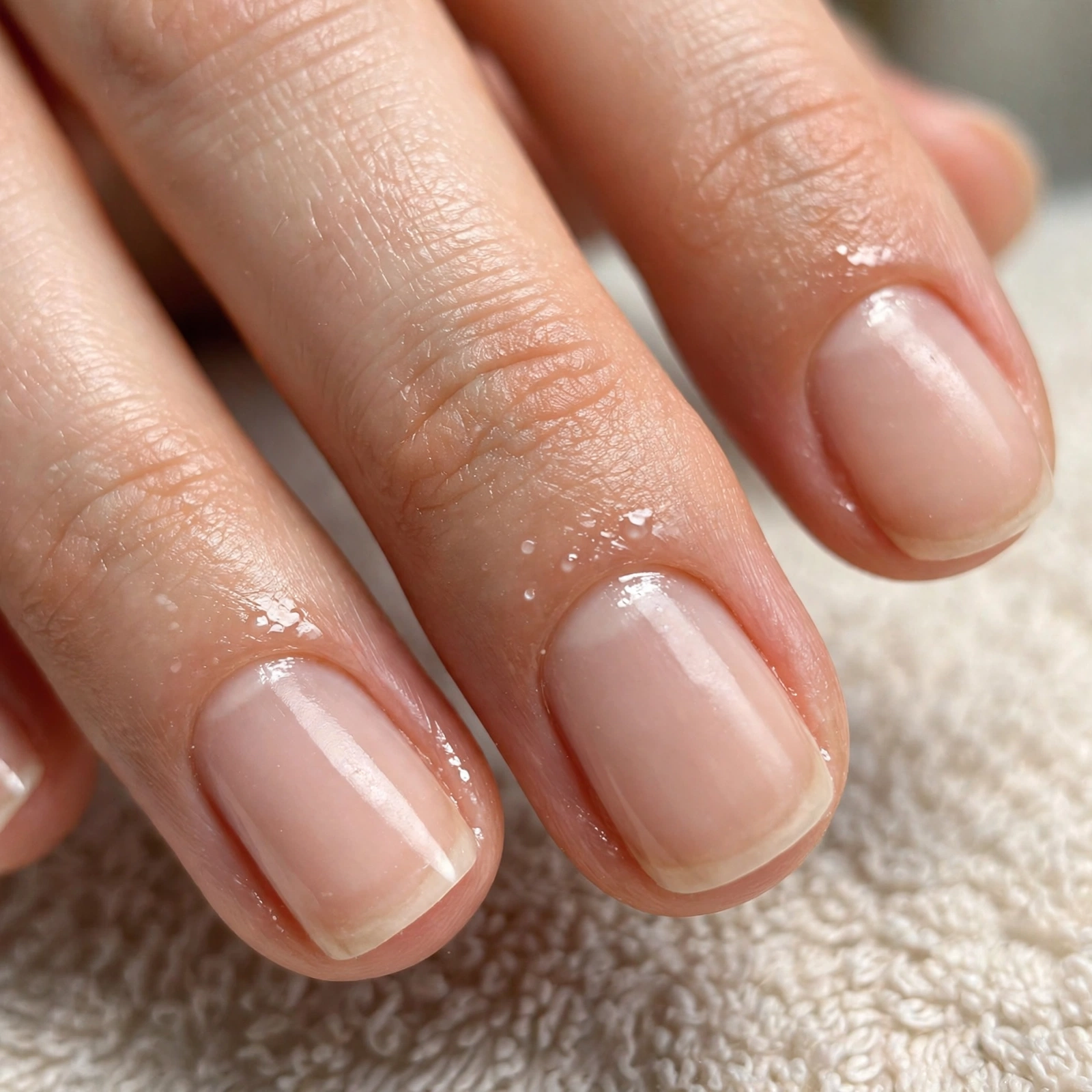
For years I treated my cuticles like they were invisible. I would get a manicure, admire the color for three days, and then watch the whole thing unravel from the edges — polish lifting where it met the skin, hangnails snagging on my sweaters, that ragged white fringe that no amount of hand lotion seemed to fix. I blamed the polish. I blamed my nail tech. I even blamed my genetics, which is the laziest excuse in the book. The truth, which a brutally honest nail tech finally told me during a fill appointment, was that my cuticles were the problem — or rather, my total neglect of them was. She showed me my own nails under her magnifying lamp and I was horrified: dry, cracked skin climbing halfway up my nail plates, pushing my polish off from underneath. That appointment cost me more than money — it cost me my illusions. So I built a cuticle care routine from scratch, testing everything the way I test everything: one variable at a time, for weeks at a time, on my own ten fingers. Some of it was useless. Some of it changed everything. What follows is the routine that survived — ten tips I actually do, in the order that matters, with the mistakes I made so you don’t have to. And yes, I call it a cuticle care routine because that’s what most of you search for, but whether you found this looking for cuticle care basics, a healthy cuticles routine, or a serious dry cuticle repair plan, this is the whole playbook.
In This Article
- What Your Cuticles Actually Need (The Biology, Made Practical)
- My Step-by-Step Cuticle Care Routine
- 10 Cuticle Care Tips That Actually Work
- Mistakes to Avoid
- Frequently Asked Questions
What Your Cuticles Actually Need (The Biology, Made Practical)
Here is the thing nobody told me for years: the word “cuticle” is doing double duty, and the confusion is why most cuticle care advice fails. The thin strip of living skin at the base of your nail — the part that hurts if you nick it — is technically the eponychium, and it is alive. It has blood supply and nerves, and it is the seal that keeps bacteria, water, and yeast out of the little pocket where your nail grows. The papery, translucent stuff that creeps onto your nail plate and makes polish peel is the true cuticle: dead keratin, no nerves, basically nail-plate cling-ons. Once I understood this split, everything clicked. You protect the living seal fiercely and you gently remove the dead cling-ons, and you never, ever mix the two jobs up.
The living seal exists because your nail grows from a factory called the matrix, which sits tucked underneath that skin at the base. Damage the seal repeatedly — aggressive cutting, chronic picking, one infection after another — and the matrix can be affected too, which is how people end up with permanent vertical ridges or dents that no buffing fixes. I learned this the hard way after a bout of picking left me with a ridge on my right thumbnail that took eight months to grow out. The dead cuticle on the nail plate matters for a different reason: polish and gel cannot bond to skin cells, so every bit of true cuticle left on the plate is a future lifting point. This is why my manicures used to chip from the base upward, and it is also why a good cuticle care routine is secretly a manicure-longevity routine in disguise. Biologically, your cuticles do not need much: moisture that actually penetrates (not just sits on top), freedom from harsh detergents and solvents, and to be left alone by sharp objects. They do not need to be “cut back” to look neat. They need to be hydrated, protected, and gently managed — a fundamentally boring prescription that produces dramatically non-boring results.
My Step-by-Step Cuticle Care Routine
My nightly ritual takes about two minutes and I do it while my moisturizer sinks in or a show’s intro plays — anchoring it to something I already do is the only reason it survived past week three. After my evening shower, when the skin is warm and soft, I take an orangewood stick and, holding it at roughly a 45-degree angle, gently nudge back the cuticle on each nail with light pressure — no digging, no scraping, just a slow sweep. If I skipped the shower that day, I run my hands under warm water for a minute first, because pushing dry cuticles is how you tear them. Then the oil: one small drop of jojoba at the base of each nail, massaged in with my thumb in slow circles for about thirty seconds per hand. I work the leftover oil down my fingers and into the backs of my hands, because dry knuckles and dry cuticles travel together. That is the whole nightly core, and honestly it does eighty percent of the work.
Once a week, usually Sunday, I do the slightly deeper version. I soak my fingertips in warm water with a pump of gentle hand soap and a teaspoon of whatever oil I am using for five minutes — warm, never hot, because hot water strips the very oils I am trying to add. After the soak I push back more thoroughly, buff away the softened dead skin with a soft nail brush or an old soft toothbrush using tiny circles, rinse, pat dry, and then layer: oil first, then a balm on top to seal it in. Mornings are the maintenance shift: after I wash my hands, I apply hand cream and make sure some of it lands on each cuticle. If I know I will be washing dishes or cleaning, gloves go on — I keep a pair under the sink and it took me an embarrassing number of ruined cuticle weeks to make this automatic. That is the entire system. Nothing fancy, nothing expensive, and my cuticles went from the ragged mess under that magnifying lamp to skin I genuinely do not think about anymore.
Fino Tip: Keep your cuticle oil on your nightstand, not in the bathroom cabinet. I tried the cabinet for a month and used it twice. The nightstand bottle gets used every single night because it is the last thing I touch before sleep — location beats willpower every time.
10 Cuticle Care Tips That Actually Work
These are in rough order of impact. Tip one alone will transform most people’s cuticles within two weeks; the rest are the supporting cast that keeps the results from sliding backward.
1. Oil Your Cuticles Every Night — But Pick the Right Oil
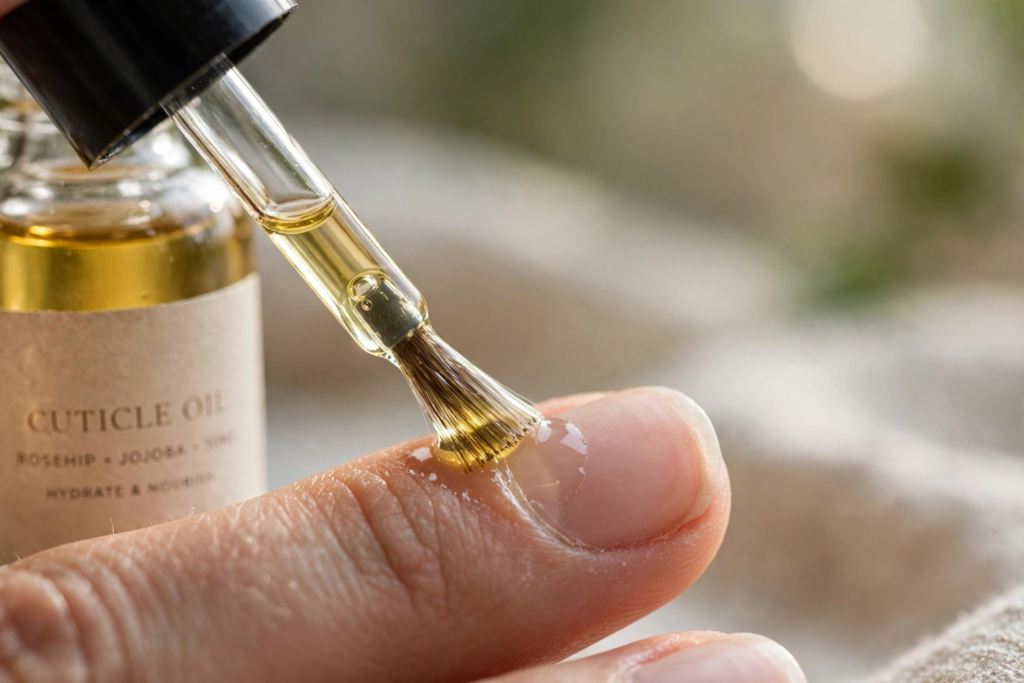
Not all oils are equal, and I wasted a year on coconut oil before learning why my cuticles still looked thirsty: coconut oil mostly sits on the surface, feeling nice for an hour before it evaporates. Jojoba oil changed everything for me because its structure closely mimics human sebum, so it actually penetrates the skin. Sweet almond oil is a fine budget option; vitamin E oil is thick and nourishing but sticky. My technique: one small drop at the base of each nail, then massage in slow circles with my thumb for about thirty seconds per hand. The massage matters as much as the oil — it drives the product in and boosts blood flow to the nail bed. The mistake I see constantly is people using hand lotion and calling it cuticle care. Lotions are formulated for the backs of your hands and their water content evaporates fast. Oil first, lotion second, every single night.
Best for: Dry, peeling, perpetually thirsty cuticles that lotion alone never fixes.
2. Push, Don’t Cut — With One Important Exception
This is the most controversial tip in nail care and I am firmly on the pushing side, because I have the scar tissue to prove why. I use a wooden orangewood stick, and I only push when cuticles are warm and damp — pushing dry cuticles is how tears happen. Hold the stick at about 45 degrees, rest the flat angled end against the cuticle, and use gentle sweeping pressure outward. You are coaxing, not shoveling. If the skin does not move, it is not ready; forcing it causes tears. Now the exception: hangnails. A true hangnail is dead, already-detached skin, and leaving it to snag guarantees a tear into living tissue. For those — and only those — clip the dead white bit flush with sanitized nippers, never pulling. If it hurts or bleeds when touched, it is alive: put the nippers down.
Best for: Everyone building the habit — it is the safest foundational technique there is.
3. Use Cuticle Remover Like a Chemist, Not Like a Janitor
Cuticle remover is the most misused product in the nail aisle. Most formulas use potassium hydroxide, an alkaline chemical that dissolves dead keratin — genuinely useful for the stubborn true cuticle fused to the nail plate — but it cannot tell dead skin you want gone from living skin you need. I leave it on for thirty to sixty seconds maximum, only on the nail plate where the dead cuticle sits, never massaged into the surrounding living skin. Then I push gently with the orangewood stick and rinse thoroughly with soap and water. I use remover at most once a week. The janitor approach — slathering it on thick, leaving it while you scroll your phone, doing it every other day — thins the living skin around the nail over time, leaving that raw, red, perpetually sore look no oil can fix. Used sparingly and precisely, it is the reason my polish now bonds cleanly to the nail plate and my manicures last noticeably longer.
Best for: Stubborn, overgrown dead cuticle stuck to the nail plate that pushing alone cannot shift.
4. Exfoliate Weekly — Gently, Like You’re Handling Silk
Cuticles accumulate dead skin like the rest of your body, and a weekly gentle exfoliation keeps buildup from turning into the rough, flaky fringe that catches on fabric. My method is almost embarrassingly simple: after my Sunday soak, I take a soft-bristled toothbrush kept specifically for this and make tiny circles around each cuticle for about ten seconds per nail, with almost no pressure. If you prefer a scrub, my DIY version is one teaspoon of fine sugar mixed with half a teaspoon of jojoba oil, because coarse sugar or salt on the delicate skin around nails causes micro-tears. The skin around the nail is some of the thinnest on your hand; treat it like the skin under your eyes and you will not go wrong. Always oil immediately afterward while the skin is still slightly damp — exfoliation followed by nothing is worse than no exfoliation at all, because you have just removed the skin’s own protective layer and left it naked.
Best for: Rough, flaky buildup and that sandpapery texture around the nail folds.
5. Seal the Deal: Layer Balm Over Oil
This layering trick took my cuticles from “better” to “I forget they exist,” and it works on the same principle as skincare slugging. Oil penetrates and nourishes, but in dry air or air conditioning it can evaporate or rub off within an hour. A balm on top — something with beeswax, shea butter, or lanolin — forms an occlusive barrier that locks the oil against the skin for hours. My winter routine is oil first, then a swipe of a beeswax-based cuticle balm stick over each nail, every night from November through March without exception. The balm stick format is worth seeking out: the twist-up tube lets you apply it without getting product all over your fingertips. I keep one in my bag, one on my nightstand, and one at my desk. If your cuticles crack in winter no matter what you do, you are almost certainly missing this sealing step. Oil alone was my exact blind spot for two winters running.
Best for: Winter cracking, split cuticles, and anyone in dry or air-conditioned environments.
6. Gloves Are Cuticle Care (Seriously)
I resisted this one longest because gloves felt fussy, and then I tracked my cuticle condition against my dishwashing for a month and the correlation was undeniable. Hot water and dish soap are engineered to strip grease, and they cannot tell the difference between last night’s lasagna pan and the natural oils protecting your cuticles — a single long dishwashing session can undo a week of diligent oiling. I now wear cotton-lined rubber gloves for dishes and any cleaning involving sprays or bleach. The sneakier culprit was hand sanitizer during a period I used it constantly; the high alcohol content devastates cuticle skin, so I switched to washing with gentle soap whenever a sink was available and saved sanitizer for true on-the-go moments. Gardening gets gloves too, because soil plus friction is a hangnail factory. This tip costs almost nothing and protects the gains from the other nine — the unglamorous goalie of the routine.
Best for: Anyone who cooks, cleans, gardens, or sanitizes their hands all day.
7. Break the Picking Habit With a Replacement Ritual
I will be honest: this was my hardest tip, because I was a cuticle picker for most of my twenties. The picking always started the same way — a tiny rough edge I could feel with my fingertip — and twenty minutes later I had a bleeding mess and a ruined manicure. What worked was the replacement ritual. I put a cuticle balm stick on my desk, and the rule became: when I feel the urge to pick, I apply balm to that nail instead. Same hand motion, same fidget satisfaction, opposite result. Within three weeks the urge itself faded, because the balm kept everything smooth and there was nothing left to catch my attention. If you do tear something, do not pull it: clip it cleanly with sanitized nippers, apply a dab of antibiotic ointment, and cover it overnight. A clean clip heals in days while a tear can throb for a week and sometimes take the nail with it.
Best for: Nervous pickers, biters, and anyone whose cuticles are worse because of their own hands.
8. Moisturize After Every Single Hand Wash
Every hand wash strips the skin’s natural lipids along with the dirt — that is literally soap’s job — and cuticles are the first casualty because the skin there is thin and constantly flexing. I keep a tube of hand cream at every sink in my house, which is exactly two tubes, and I apply it after every wash, working some into each cuticle with a quick press of the thumb. What is in the cream matters: I look for shea butter, glycerin, or ceramides high on the ingredient list, and in winter I specifically hunt for formulas with around five percent urea — a humectant that also gently softens rough cuticle skin, the quiet overachiever of hand cream ingredients. This tip is pure frequency play: no single application is dramatic, but twenty small applications a week compound into cuticles that never get the chance to dry out. The least exciting tip on this list, and quietly one of the most effective.
Best for: Office workers, frequent hand-washers, and dry indoor environments.
9. Give Your Cuticles a Break Between Enhancements
Gel and acrylics look incredible, but removal is brutal on the skin around the nail — acetone soaks dehydrate everything they touch, and aggressive filing or prying lifts the living seal along with the product. After my worst gel-removal left my cuticles peeling in actual sheets, I instituted a rule: at least one bare-nail week between sets, and during that week the cuticles get the full treatment — nightly oil, daily balm, the Sunday soak, no exceptions. Even three or four bare days between appointments make a visible difference; I have watched redness fade by day three. During the break I keep nails short and smoothly filed. And when I return to enhancements, I ask the tech to push rather than cut my cuticles during prep — cheerfully, firmly, every time. Healthy cuticles also mean better adhesion for the next set, so the break pays for itself in longer-lasting manicures when you go back.
Best for: Regular gel, acrylic, or dip wearers whose cuticles never fully recover between sets.
10. Do the Sunday Reset Soak
This is the ritual that ties the whole routine together, and I protect it the way other people protect their Sunday morning coffee. Fill a small bowl with warm — not hot — water, add a pump of gentle hand soap and a teaspoon of jojoba or almond oil, and soak your fingertips for five minutes. After the soak, push the softened cuticles back gently with the orangewood stick, do the soft-toothbrush exfoliation from tip four, rinse, and pat dry. Then the layering finale — oil massaged into each cuticle, balm stick over the top to seal it. The whole thing takes fifteen minutes and resets the week: everything is deeply hydrated, and the nightly two-minute maintenance has a clean foundation to protect. Do the nightly oil from tip one plus this weekly soak and you have a complete foundation that makes everything else, including nail art, look dramatically better.
Best for: Anyone who wants one weekly ritual that makes the daily maintenance nearly effortless.
Fino Tip: Massage each cuticle for a full thirty seconds when you apply oil — I timed it once and realized my “massage” had been about four seconds. The longer massage visibly improved my results within ten days, because it drives the oil in and stimulates blood flow to the nail bed where growth happens.
Mistakes to Avoid
I made every one of these mistakes, some of them for years, so consider this the section I wish someone had handed me at the start.
Cutting living cuticle skin, at home or at the salon. The living seal exists to keep infection out, and every cut is an open door. I used to ask nail techs to “cut them back really clean” because I thought neat meant cut; what it actually meant was a week of red, sore nail folds and, twice, a genuine infection that needed antibiotic ointment. Now I say “please just push them back” before the tech even reaches for the nippers, and I have never once regretted it.
Ripping hangnails instead of clipping them. Pulling a hangnail tears downward into living tissue, and the tear is always deeper than the bit you can see. I once ripped one on my index finger and the resulting wound throbbed for five days and took a chunk of nail with it as it healed. Clip the dead white part flush with clean nippers, leave everything else alone, and cover it if it is sore.
Leaving cuticle remover on too long or using it too often. The bottle’s “few minutes” is written for the toughest case, not for your maintenance routine. I used to leave it on while I answered emails — ten, fifteen minutes — and wondered why my cuticles looked thinner and angrier every month. Thirty to sixty seconds, rinse thoroughly, once a week at most.
Buying products instead of building consistency. My bathroom drawer once held four cuticle oils, two balms, and a remover I never touched, while my actual routine was nothing. A five-dollar bottle of jojoba used every night beats a fifty-dollar kit used twice. I now allow myself exactly one oil and one balm in active use; everything else is clutter that lets me feel productive without being productive.
Ignoring the inside game entirely. No oil in the world compensates for chronic dehydration. I noticed my cuticles were measurably worse during a month when I was barely drinking water and living on dry office air — same products, worse results. Drinking water consistently and eating enough healthy fats will not replace topical care, but skipping them puts a ceiling on how good your cuticles can look. The routine works from the outside in; give it help from the inside out.
Fino Tip: If a salon tech reaches for the nippers without asking, speak up before they cut — a cheerful “could you just push mine back today?” takes three seconds and I have never had a tech react badly to it. The awkward thirty seconds of silence afterward is far better than a week of sore, infected cuticles.
Frequently Asked Questions
Should I cut my cuticles or just push them back? Push them back. The living skin at the base of your nail is a protective seal against bacteria and moisture, and cutting it opens a direct path for infection while often triggering the skin to grow back thicker and more ragged than before. The only thing safe to trim is a true hangnail — dead, detached skin — clipped flush with sanitized nippers. Everything else gets pushed gently, and only when warm and soft.
How long does a cuticle care routine take to show results? In my experience, the texture improves within the first week of nightly oiling — less roughness, fewer snags. Visible transformation, the kind where someone notices, takes about three to four weeks, which is roughly one full cycle of skin turnover around the nail. The deep repair jobs — growing out ridges caused by past damage, fully healing chronic peeling — took me two to three months. Consistency matters more than intensity; two minutes nightly beats an hour-long spa session once a month.
What is the best oil for cuticles? Jojoba oil, and it is not particularly close. Its composition closely resembles human sebum, so it absorbs into the skin around the nail rather than sitting on the surface the way coconut or olive oil tend to. Vitamin E oil is a good runner-up for very damaged cuticles because it is thicker and more nourishing, though it feels stickier. If budget is the priority, sweet almond oil does a respectable job. Whatever you choose, the nightly habit matters more than the specific bottle.
Can dry cuticles really make my polish chip faster? Yes, and this was the revelation that converted me. Polish cannot bond to the dead cuticle skin creeping onto your nail plate, so it lifts from the base — which looks exactly like chipping. When I started properly managing my cuticles, my manicures gained several extra days with no change to the polish or the application. Cuticle care is genuinely one of the highest-leverage things you can do for manicure longevity.
Is it normal for cuticles to bleed when I push them back? No — bleeding means you have gone past dead skin into living tissue, and it is your signal to stop immediately. Pushing should never hurt and never draw blood. If it does, you are pushing too hard, pushing dry cuticles, or using a tool that is too sharp. Give the area a few days of just oil and balm to recover. If redness, swelling, or throbbing persists beyond a couple of days, or you see spreading redness, see a clinician — that can be an infection, and nail-fold infections are not something to tough out.
Do I need a cuticle care routine if I never wear polish? Honestly, yes — arguably more so. Bare nails show everything, and ragged cuticles are more visible without polish to distract the eye. The routine is also simpler without polish in the picture: no worries about oil interfering with adhesion, so you can oil freely all day. Some of the best-looking natural nails I have seen belong to people who do nothing but oil, push, and glove up for dishes.
That is the whole routine — the biology that finally made it click for me, the two-minute nightly ritual, the ten tips in order of impact, and every mistake I made along the way so you can skip straight to the part where it works. My cuticles went from the horror show under that magnifying lamp to something I never think about, and the maintenance is so small now that it barely registers as effort. Start tonight: one drop of oil, thirty seconds of massage, and you are already further than I was for the first decade I had nails.


Pingback: How to Remove Gel Polish at Home Safely
Pingback: Why Nails Split in Cold Weather: My Fall Repair Routine
Pingback: Best Nail Polish Remover for Natural Nails (2026)
Pingback: Why Do My Nails Have Ridges? Causes & Fixes
Pingback: Why Do My Nails Break So Easily? Causes & Fixes
Pingback: How to Do a Pedicure at Home: My Salon-Quality Routine