
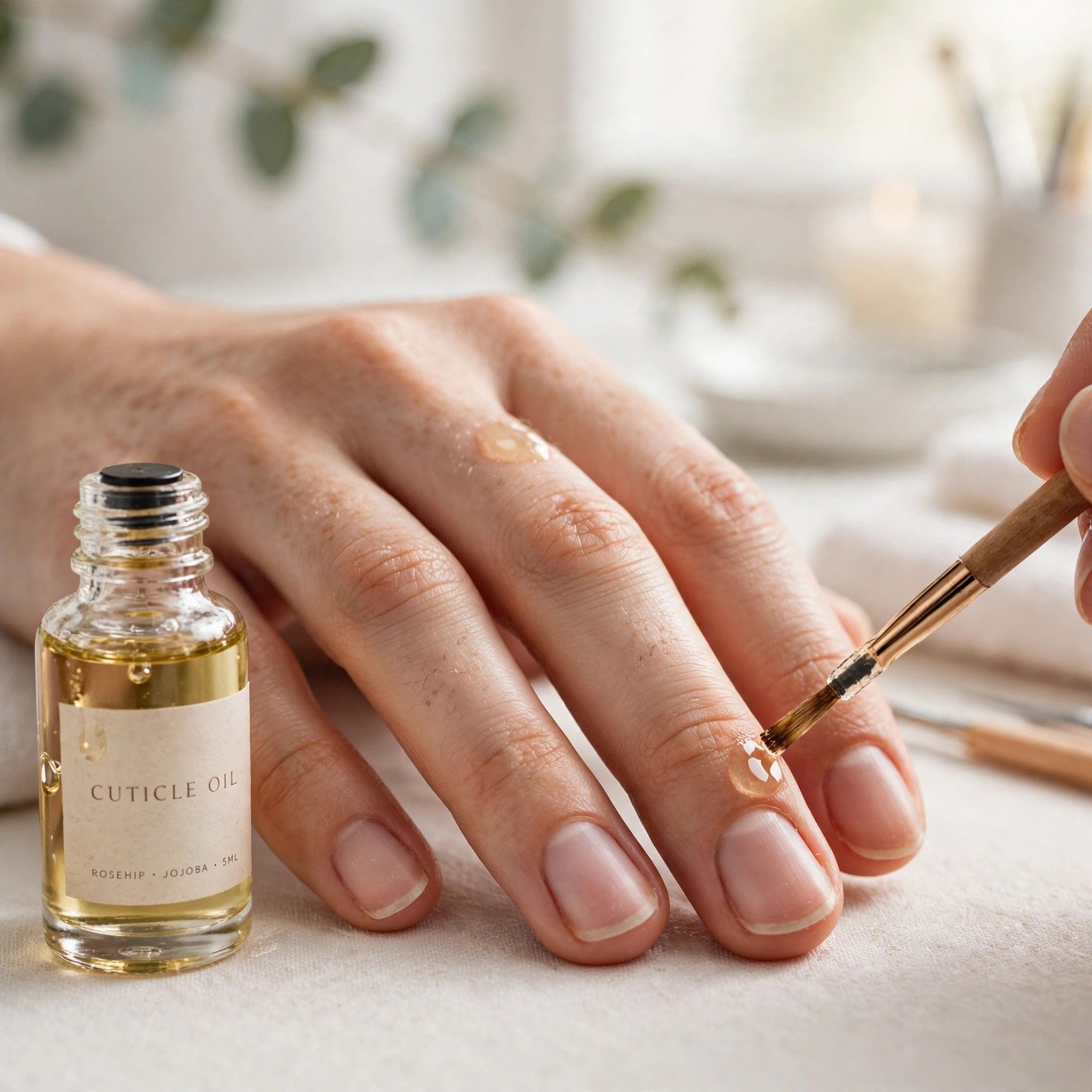
Do acrylic nails damage your nails? I am going to answer that the way I wish someone had answered it for me two years ago: yes — but not in the way most people think, and not always in the way you cannot come back from. Acrylics did not ruin my nails forever. They did thin them, dry them out, and leave me with a set of nails I barely recognised when I finally took them off. And then, over about six months of patient care, my nails came back. Not overnight, and not because of one miracle product, but because I finally stopped doing the things that were hurting them and started doing the boring, consistent things that actually help.
I wore acrylics almost continuously for two years. Not the occasional set for a wedding or a holiday — I mean back-to-back sets, fills every two to three weeks, the whole routine. I loved how they looked. My hands looked finished, polished, put together even on days when the rest of me was not. I could type, open cans, and live my life without worrying about a natural nail snapping at the worst moment. So when people asked me whether acrylics damage your nails, I used to wave the question away. My nails looked fine — because you could not see them. That was the whole problem. Underneath those perfect sets, my natural nails were getting thinner, drier, and weaker with every appointment, and I had no idea until the day I took a break and saw what was actually there.
This is not a scare piece, and it is not a defence of acrylics either. I still wear them sometimes. I just wear them differently now, with breaks, with a tech I trust, and with rules I will not break again. If you are wondering whether acrylics are bad for you, whether your nails will ever recover, or whether you can keep wearing them safely, this is the honest account I wish I had read before my first set. Everything here is my personal experience, not medical advice — if you have a reaction, an infection, or pain that does not go away, see a dermatologist rather than trying to fix it at home.
In This Article
- My Acrylic Story (What Two Years of Sets Did to My Nails)
- The 5 Ways Acrylics Damage Nails
- Occasional vs Continuous: How Bad Is It Really?
- My 6-Month Recovery Plan
- Who Should Skip Acrylics?
- Safer Alternatives That Still Look Great
- Mistakes to Avoid
- Frequently Asked Questions
My Acrylic Story (What Two Years of Sets Did to My Nails)
My first acrylic set was for a friend’s wedding. I had bitten my nails since I was a teenager, and I wanted hands that looked elegant in the photos. The tech filed my nails, applied tips, sculpted the acrylic, and painted them a soft nude. I remember staring at my hands on the drive home and thinking, this is how my hands were supposed to look all along. I went back two weeks later for a fill, then again, and again. Within a couple of months, acrylics were not a treat any more. They were my nails, as far as I was concerned.
For the first year, everything felt fine. My sets lasted. I chose coffin shapes, then almond, then short square when I got tired of catching long tips on everything. I learned which salons rushed and which ones took their time. I learned that a good tech matters more than a fancy salon. What I did not learn — because I never looked — was what was happening underneath. Every fill started with filing. Every removal, when I did take a set off, involved more filing or a long acetone soak. My natural nail plate, the hard keratin surface that protects the nail bed, was being filed thinner a little at a time, appointment after appointment. Nobody told me that, and I never asked.
The first warning sign I actually noticed was lifting. A corner would pop up near the cuticle, and I would press it back down or glue it myself, which I now know was a terrible idea. Then came the soreness. Not dramatic pain, just a tenderness when I pressed on a nail, or a sting when I used hand sanitiser. I told myself it was normal. It was not normal, exactly — it was my nails telling me the bond between the acrylic and the nail plate was failing in places, and moisture and bacteria were getting into the gap. I kept going anyway, because the sets still looked good from the outside, and because taking them off felt like admitting defeat.
When I finally took a proper break — I had a holiday coming up and decided to go bare for a month — the reveal was sobering. My nails were paper-thin. They bent when I pressed them. They peeled in layers at the free edge, like the pages of a cheap notebook. There were white spots and ridges I had never seen before, and the surface felt rough and dry, almost chalky. A couple of nails had a strange yellowish tint near the tips. They were also short, obviously, because I had not seen them grow in years, but the thinness was the shock. I could feel heat and cold through them in a way I never had before. Typing hurt. Opening a tin hurt. I had spent two years believing acrylics were protecting my nails, and in that moment I understood they had been doing the opposite — hiding the damage while it accumulated.
Here is the part I want to be clear about, because it is the honest verdict this whole article is built on: acrylics themselves, the product, were not the only problem. The filing, the fills, the way I ignored lifting, the way I peeled a loose set off in the car once when I was impatient — those were the real damage. The acrylic was the enabler. A well-applied set, by a careful tech, with proper removal and real breaks, is a very different thing from what I did for two years. I did not know that then. I do now, and it changed everything about how I wear them.
Fino Tip: Take a photo of your bare nails the day you remove a set, and again every month. I wish I had. Photos are the only honest record of whether your nails are actually recovering, because day to day you will convince yourself nothing is changing.

The 5 Ways Acrylics Damage Nails
When people ask whether acrylics damage nails, they usually mean one thing, but there are actually five different kinds of damage, and they work differently. I experienced four of the five myself, and the fifth is the one I am most careful about now. Understanding them separately matters, because each one has a different fix — and a different warning sign you can catch early if you know what to look for.
1. Filing Thins the Nail Plate
This is the big one, and the one almost nobody warns you about at your first appointment. Before acrylic is applied, the surface of your natural nail has to be roughened so the product can grip. A good tech does this gently, with a fine file, just enough to remove the shine. A rushed or heavy-handed tech files much harder, and over months of fills the thinning adds up. My nails felt thin because they literally were thin — the nail plate is only a few millimetres thick to begin with, and every aggressive filing takes a layer off that does not grow back until the whole nail grows out.
I learned to tell the difference by feel. After a gentle prep, my nails felt slightly textured but still solid. After a heavy filing, they felt hot, tender, and almost soft, and I could feel the file vibrating in a way that made me flinch. I never said anything, because I thought that was just how it was supposed to feel. It is not. If your nails sting when the tech files, or feel sore for a day after your appointment, that is your nail plate telling you too much was taken off. The fix is simple and awkward: ask your tech to use a finer file and a lighter hand, and if they will not, find another tech. My nails did not start recovering until I stopped letting anyone file them aggressively.
2. Chemical Irritation and Allergy
Acrylics are chemistry, not magic. The liquid monomer and powder polymer react to form the hard enhancement, and the chemicals involved — acrylates — can irritate skin and, in some people, trigger a genuine allergic reaction. I never had a full allergy, but I did have a phase where the skin around my nails was red and itchy for a day or two after every appointment, especially around my cuticles. I blamed dry skin and hand washing. It was probably low-grade irritation from product touching my skin during application, which happens when acrylic is applied too close to the cuticle or floods onto the surrounding skin.
A true acrylate allergy is different and more serious: swelling, intense itching, blistering, or skin peeling around the nails, sometimes spreading to the fingertips or even the face if you touch it. Once you develop this kind of allergy, it tends to stick around, and it can mean you cannot wear acrylics or gel products again, because many of them share the same chemical family. That is why I now watch the skin around my nails as carefully as the nails themselves. Redness that lasts more than a day, itching that keeps you awake, or any blistering means stop, remove the product properly, and see a dermatologist. I was lucky. Plenty of people are not, and they only find out after years of exposure.
3. Removal Damage
Removal is where I did the most damage to myself, and I did it with my own hands. I have peeled off a lifting set in the car. I have picked at a corner during a boring meeting until the whole nail came away. I have yanked at a loose tip because it was catching on my sweater. Every single time, I was not just removing acrylic — I was ripping off the top layers of my own nail plate along with it, because the acrylic bonds to the nail and the nail loses that fight. The white, flaky, shredded surface I saw after peeling was not glue residue. It was my nail, torn away in layers.
Proper removal is slow and boring, which is exactly why people skip it. The right way is an acetone soak until the acrylic softens and can be gently pushed away, with no forcing, no prying, and no filing of the natural nail underneath. I wrote a full account of how I do it now in my guide to removing acrylic nails at home, and the short version is this: if it does not slide off easily, it is not ready, so soak it longer. The ten minutes you save by peeling is paid for with weeks of thin, peeling nails afterwards. I know, because I paid it more than once.
4. Lifting and Onycholysis
Lifting is when the acrylic separates from the natural nail, usually starting at the cuticle or the sides, and it was my most constant problem in year two. At first I thought it was a cosmetic annoyance — a little pocket of air under the enhancement. What I did not understand was that the gap becomes a warm, damp space where moisture collects, and that is exactly where bacteria and fungus love to live. The greenish discolouration people sometimes call a “greenie” is a bacterial stain, and while it is usually on the surface and grows out, it is a sign that moisture has been trapped under a lifting enhancement for too long.
Onycholysis is the more serious version: the natural nail itself starts separating from the nail bed underneath, often because of trauma, over-filing, or repeated lifting pulling at the nail. I had a thumbnail that developed a pale, lifted area near the tip that took months to grow out, and it hurt when I pressed on it. The lesson I took from both problems is the same: a lifting nail is not something to glue down and ignore. It is a signal to get a fill or a removal sooner, not later, and to keep the nail dry. I also learned to ask my tech to check for lifting at every fill instead of just filing over it, because filing over a lifted area just seals the problem in.
5. The Gap and Bacteria Problem
This one is closely related to lifting, but it deserves its own place because it is the damage I feared most once I understood it. When there is a gap between the acrylic and your natural nail — from lifting, from a crack, from a set that has grown out too far past its fill date — water gets in and does not get out. I used to wash my hands, shower, swim, and go about my day with tiny gaps under my enhancements, and that trapped moisture is what creates the perfect environment for bacterial and fungal growth. The smell, when I finally removed a set that had been lifting for a while, was the part that really stayed with me. It was faint, musty, and unmistakable, and it told me the gap had been harbouring something for weeks.
The fix is unglamorous: do not stretch your fills. I now go every two to three weeks without exception, and if a nail lifts between appointments, I get it fixed or removed rather than living with it. I also dry my hands thoroughly, including under the free edge, and I do not soak my hands for long periods when I have enhancements on. It sounds fussy until you have dealt with a green stain or a sore, separated nail, and then it sounds like the easiest trade in the world. If you ever see green, yellow, or dark discolouration under an enhancement, or smell anything unusual when a set comes off, do not cover it with a new set — let it breathe, keep it clean and dry, and get it checked if it does not improve.
Occasional vs Continuous: How Bad Is It Really?
Here is the question everyone actually wants answered: if I wear acrylics, how bad is it really? After two years of continuous wear and then a long stretch of wearing them properly, my honest answer is that it depends almost entirely on the pattern, not just the product. Occasional wear and continuous wear are not the same thing, and pretending they are is why so much advice about acrylics feels contradictory — one person says they ruined her nails, another says she has worn them for a decade with no problems, and both of them are telling the truth about their own experience.
Occasional wear, in my experience, means a set for a special occasion, worn for two to three weeks, removed properly, and followed by at least a few weeks bare. That pattern gives your nails time to recover between sets, and the filing and soaking happen infrequently enough that the nail plate is not being ground down faster than it can grow out. A full healthy nail takes roughly six months to grow from cuticle to free edge, which is a useful frame: if you are only wearing acrylics for a few weeks at a time with real breaks, you are not asking your nails to endure constant stress. I have done this pattern for holidays and events since my recovery, and my nails have stayed strong through it, because the breaks do the work.
Continuous wear is what I did for two years: set after set, fill after fill, no bare period longer than a day or two, and often not even that. The problem with continuous wear is not any single appointment. It is the accumulation. Each fill files the new growth. Each removal thins the plate a little more. Each stretched fill invites lifting and moisture. None of it is dramatic on its own, which is why it is so easy to ignore, but after a year or two the total is a nail plate that is noticeably thinner, weaker, and more prone to peeling than it was when you started. That is what happened to me, and it is the pattern I see in almost every horror story online — not one bad set, but years without a break.
There is also a middle pattern that I think is the realistic one for most acrylic lovers, and it is the one I live in now: regular wear with planned breaks. I wear acrylics for two or three months, then take a full month off. I get fills every two to three weeks — I wrote about how long acrylic nails last and why that fill schedule matters — and I never stretch a fill to save money or time, because I have learned that the stretched fill is where the lifting and the damage start. During my breaks I do the recovery routine I describe below, and I do not cheat on it. My nails are not as thick as they were before I ever wore acrylics, if I am being completely honest, but they are strong, they do not peel, and they look healthy bare. That is a trade I am happy with.
So how bad is it really? For occasional wear with proper removal, I would call the risk low and the recovery quick. For continuous wear without breaks, I would call the damage real, cumulative, and slow to reverse — not permanent, in my experience, but not trivial either. The difference between those two outcomes is not luck. It is breaks, gentle filing, timely fills, and proper removal. If you love acrylics and want to keep them, you do not have to quit. You have to change the pattern. If you are comparing systems and wondering whether another enhancement would be kinder, I compared the two in detail in my acrylic vs gel nails guide, and I also looked specifically at whether gel nails damage your nails — the short version is that gel can be gentler on removal, but it is not damage-free either, and the same habits matter.
Fino Tip: Put your next break in your calendar the day you get a new set, the way you would book a holiday. If the break is not scheduled, it will not happen — I proved that to myself for two years.
My 6-Month Recovery Plan
When I took my acrylics off for good that first time, I wanted a plan, not vague advice to “be gentle.” I wanted to know what to do this week, this month, and when I could expect to see a difference. So here is the plan I actually followed, roughly month by month, and what I noticed at each stage. It is not a medical treatment plan. It is what worked for my nails, and the timeline is honest: a full nail takes about six months to grow out completely, so anyone promising you fixed nails in two weeks is selling you something.
Month one was triage. I kept my nails very short, because short nails do not snag, bend, or peel the way long thin nails do. I filed them in one direction only, with a fine glass file, and I stopped using metal files and clippers roughly. I oiled my cuticles and nails every night — plain jojoba oil, nothing fancy — and I massaged it in for a minute, because the massage increases blood flow to the nail matrix and it became a habit I actually looked forward to. I wore gloves for washing up and cleaning, because water and detergents dry out an already dry nail plate, and I used hand cream after every wash. The visible change in month one was small: less peeling at the tips, less snagging. The real change was that I stopped making it worse.
Months two and three were where I started to see new growth that actually looked different. The half-moon area near the cuticle grew in smoother and less ridged than the old damaged nail, and the new nail felt slightly thicker when I pressed it. I kept the routine the same, because consistency was the whole point, and I added a nail strengthener — a clear, formaldehyde-free one, applied as a base coat a couple of times a week, not a hardener I layered on daily until it made my nails brittle. I also stopped using acetone-based remover entirely during the recovery; when I wore regular polish, I removed it with a gentler, acetone-free remover, and I gave my nails a day or two bare between polishes. I wrote more about the daily habits that helped in my guide to taking care of acrylic nails, and many of the same habits apply whether you are wearing enhancements or recovering from them.
Months four and five were the patience test. By then about two-thirds of each nail was new growth, and the difference between the old damaged tip and the new nail was obvious — the new part was smoother, stronger, and did not peel. The old tip was still thin, and I had to resist the urge to grow my nails long before the damaged part had grown out, because long thin tips just break and set you back. I kept them at a practical length, I kept oiling, and I started paying attention to the inside stuff too: I was eating better, drinking more water, and taking a basic multivitamin, not because any single nutrient fixes nails overnight, but because nails are made of keratin and they grow from what your body has available. I cannot prove the vitamins did anything specific, and I will not pretend otherwise, but my nails, skin, and hair all looked better when I was eating and sleeping properly, and that is worth saying plainly.
Month six was the payoff. The last of the damaged nail grew out and was filed away, and what was left was entirely new nail. It was not identical to my pre-acrylic nails — I think they are still a fraction thinner at the tips, and I am honest about that — but they were strong, smooth, and healthy-looking, and they did not bend or peel. That was the moment I knew I could wear acrylics again if I wanted to, because I finally had a healthy base to start from. If you are in the middle of this process now, my advice is to judge your progress by the new growth near the cuticle, not by the old damaged tip. The tip is history. The cuticle is the future. And if your nails are still weak after six months of proper care, or you see persistent discolouration, pain, or separation, that is a dermatologist conversation, not a product conversation — I mean that sincerely.
Fino Tip: Do not judge your recovery by the oldest, most damaged part of the nail. Judge it by the new growth at the cuticle. If the new nail coming in looks smooth and strong, the plan is working, even if the tip still looks rough.
Who Should Skip Acrylics?
I love acrylics, and I am not going to tell everyone to avoid them. But there are people who should skip them, or at least think very carefully first, and I wish someone had said this to me before my first set. If you have very thin, weak, or damaged nails already, acrylics will not protect them — that is a myth I believed for a long time. The filing and removal will make thin nails thinner, and the weight of the enhancement can make weak nails more likely to break at the stress point. If your nails are already peeling and splitting, fix that first. I have a full routine for strengthening nails after acrylics that works just as well as a starting point before your first set as it does as a recovery plan.
If you have ever had an allergic reaction to acrylics, gel, or nail products — itching, swelling, blistering, or skin peeling around the nails — do not just try a different salon and hope for the best. Acrylate allergy tends to persist, and repeated exposure can make it worse. See a dermatologist, get properly tested if they recommend it, and listen to what they say. The same goes if you have a skin condition like eczema or psoriasis that affects your hands or nail area, because the chemicals and the filing can trigger a flare that is far more miserable than any manicure is worth. I have a friend with eczema who learned this the expensive way, and she now wears press-ons for special occasions instead, which gives her the look without the chemical exposure.
You should also skip acrylics, or at least pause them, if you have an active nail infection, a fungal infection, or a nail that is separating from the bed. Covering an infection with an enhancement traps moisture and hides the problem while it gets worse, and no reputable tech should apply acrylic over an infected or visibly damaged nail. If your nail is green, yellow, painful, swollen, or smells odd, that is not a cosmetic issue — get it checked, let it heal, and come back to enhancements later. And if you are someone who cannot commit to fills every two to three weeks, be honest with yourself about that too. Acrylics are a maintenance commitment, and the damage I describe in this article mostly happens when that maintenance slips.
Finally, if you are getting your very first set, read my first-time acrylic nails guide before you book, and choose your tech the way you would choose a hairdresser: by recommendation, by watching how they work, and by whether they listen when you say your nails feel sore. A tech who files gently, keeps product off your skin, and tells you honestly when your nails need a break is worth more than any discount or fancy salon. I stayed with a bad tech for far too long because the salon was convenient, and my nails paid for that convenience.
Safer Alternatives That Still Look Great
Quitting acrylics does not have to mean giving up on beautiful nails. I tried almost every alternative during my recovery year, and some of them genuinely surprised me. Builder gel, also known as BIAB, was the one I liked most. It is a thicker gel applied over your natural nail to add strength and a little length, and because it soaks off rather than being filed off aggressively, the removal is kinder. It does not give you the dramatic length of sculpted acrylic, but for everyday wear — a neat, strong, glossy nail in a pretty colour — it is honestly better than acrylic for most people, and it is what I wear most often now.
Gel polish on your natural nails is another good middle ground, as long as your nails are reasonably healthy to begin with. It gives you two to three weeks of chip-free colour without the weight or the filing of acrylic, and removal is a soak, not a battle. The catch is the same as with acrylic: if the gel is peeled or pried off, it takes nail with it, so you have to commit to proper removal. I peeled gel polish off exactly once during my recovery, out of pure impatience, and I set myself back weeks — the peeling took the top layer of my new growth with it, and I was furious with myself. Learn from my mistake, not your own.
Press-on nails have also improved beyond recognition since I first tried them years ago. The modern ones, applied with proper glue and sized correctly, can look genuinely convincing for a weekend or a special event, and when you take them off properly — with warm soapy water and gentle easing, never ripping — they do almost no damage at all. They are my choice now for occasions when I want drama for one night and my own nails back on Monday. Dip powder is another option people ask me about, and I like it in moderation, but it still involves filing and acetone removal, so I would not call it damage-free — just a different set of trade-offs. The honest summary is that no enhancement is completely free of risk. The safest choice is the one you wear for the shortest time, remove the most gently, and give your nails the longest break from afterwards.
Mistakes to Avoid
I made nearly every mistake on this list, so I am not writing it from a pedestal. I am writing it as the person who paid for each one. The first and worst was peeling off a lifting set. I did it in the car, in meetings, while watching television — anywhere I was bored and a corner was loose. Every time, I tore off layers of my own nail plate, and the white, shredded surface underneath was the evidence. If a nail is lifting, soak it off or get it removed professionally. Peeling is never the shortcut it feels like in the moment.
The second mistake was stretching my fills. I told myself that three weeks could become four, and four could become five, because the set still looked fine from a distance. What I could not see was the gap growing between the acrylic and my nail as it grew out, and the moisture collecting in it. I also ignored lifting and glued loose corners down myself, which sealed in whatever was already in the gap. If you take one practical rule from this article, make it this: never stretch a fill past three weeks, and never glue a lifting nail and carry on as normal. That habit alone would have prevented most of my damage, including the lifting problem I kept blaming on my tech. I eventually learned that acrylic nails keep lifting for reasons that are often fixable — prep, product, and timing — but only if you catch the lifting early instead of covering it up.
The third mistake was staying silent when filing hurt. I thought soreness was part of the process, and I did not want to be a difficult client. It is not part of the process. A good tech wants to know if something hurts, because pain means the nail plate is being stressed, and a tech who dismisses that is telling you everything you need to know about them. Speak up, and if nothing changes, change techs. The fourth mistake was using my nails as tools — opening cans, scraping labels, prying things open — which put stress on the enhancement and the natural nail underneath, and caused cracks and lifting that I then ignored. Acrylics are strong, but they are not tools, and neither are your natural nails. The fifth mistake was skipping aftercare entirely during my breaks. I would take a set off, do nothing for my nails for a month, and wonder why they were not recovering. Recovery is active, not passive — oil, gloves, gentle filing, and patience, every day, not just when you remember.
Fino Tip: If you only change one habit after reading this, make it this: never peel, pick, or pry an enhancement off. Soak it off, every time, even when you are impatient. Your future nails will thank you for the ten minutes.
Frequently Asked Questions
Are acrylic nails bad for you? In my experience, acrylics are not inherently bad, but they are not harmless either. The product itself is safe for most people when it is applied and removed properly, and I still wear acrylics sometimes. The harm comes from the pattern around them: aggressive filing, stretched fills, ignored lifting, and peeling sets off instead of soaking them. Occasional wear with proper removal and real breaks is low-risk for most people. Continuous wear without breaks, which is what I did for two years, thins the nail plate, dries the nail out, and makes lifting and infection more likely. So the honest answer is that acrylics are as bad as the habits around them, and the habits are entirely within your control.
How long do nails take to recover after acrylics? For me, it took about six months for a full, healthy nail to grow out completely, and that matches what I have read about nail growth — a fingernail takes roughly six months to replace itself from cuticle to tip. I saw real improvement much sooner than that: less peeling within a month, visibly stronger new growth by months two and three, and a clear difference by month four. But the old damaged nail has to grow out and be filed away before you can say you have fully recovered, and you cannot rush that. Short nails, daily oil, gloves for cleaning, and no new enhancements during the recovery will get you there faster than any single product.
Do acrylics ruin your nails permanently? In my experience, no — and that is the most hopeful thing I can tell you. My nails looked terrible when I first took my sets off after two years of continuous wear: thin, peeling, ridged, and weak. Six months later they were strong and healthy again. Nails grow, and the damaged part eventually grows out and is replaced by new nail, as long as the nail matrix — the root where the nail is made — has not been seriously injured. Permanent damage is rare and usually comes from a severe infection, a serious allergic reaction, or trauma to the nail matrix, not from normal wear. If your nails are not improving after six months of proper care, or you have persistent pain, discolouration, or separation, see a dermatologist, because that is a sign something else is going on.
Can you wear acrylics with thin nails? You can, but I would not recommend starting acrylics when your nails are already thin and weak, because the filing and removal will make them thinner. If your nails are thin because of previous acrylic wear, take a break first and let them recover — even a month or two of proper care makes a real difference. If you do wear acrylics with thin nails, tell your tech, ask for the gentlest possible prep, choose a shorter length to reduce stress on the nail, and never let a set go past its fill date. A shorter, well-maintained set on thin nails is far safer than a long dramatic set that puts leverage on a weak nail plate every time you catch it on something.
How often should I take a break from acrylics? This is the question I get asked most, and my honest answer is that there is no single rule, but there is a pattern that worked for me: after two to three months of continuous wear, I take a full month off. Some people take a week off between sets, and that is better than nothing, but a week is not enough for meaningful recovery — the nail grows only a few millimetres in a week. A month gives you visible new growth to judge, and it gives the nail plate a real rest from filing and chemicals. If you cannot face a month bare, even two weeks of diligent care is a start. The worst pattern, and the one I lived in for two years, is no break at all.
Is it normal for nails to hurt after acrylics? Mild tenderness for a day after a fill can happen, especially if your nails are thin, but ongoing pain is not normal and should not be ignored. Soreness, throbbing, or pain when you press on a nail can mean the nail plate has been over-filed, the enhancement is too long or too heavy for your natural nail, or there is lifting or infection underneath. I ignored low-level soreness for months and told myself it was normal, and it was a mistake. If your nails hurt, get the set checked or removed, keep the nail clean and dry, and see a dermatologist if the pain persists, if there is swelling, or if you see discolouration or discharge. Pain is information, and your nails are trying to tell you something.
So, do acrylic nails damage your nails? Yes, they can — and in my case, they did. But they did not ruin my nails, and they do not have to ruin yours. The damage I experienced came from two years of continuous wear, aggressive filing, stretched fills, ignored lifting, and peeling sets off myself. The recovery came from six months of short nails, daily oil, gloves, gentle care, and patience. If you love acrylics, keep wearing them — just wear them on purpose, with breaks, with a tech who respects your natural nails, and with the honesty to take them off and look underneath from time to time. Your nails will tell you the truth if you let them. Mine did, eventually, and I am glad I finally listened.


Pingback: How to Take Care of Acrylic Nails (2026 Guide)