
I bit my nails for most of my life. Not nervously, not occasionally — properly, down to the quick, until my fingertips were sore and my nails were so short there was nothing left to paint. I tried to stop more times than I can count, and every time I lasted about three days before something stressful happened and I was back at it. People call it nail biting, and the clinical word is onychophagia, but honestly I just use plain words here because that is how I actually thought about it: I was a nail biter, and I wanted long nails, and I could not figure out how to get from one to the other.
What finally changed was not willpower. It was a system. I stopped trying to quit in one dramatic gesture and started building a routine that made biting harder, growing easier, and slipping less catastrophic. It took about three months before I had nails I genuinely liked, and there were relapses along the way — including one memorable one during a family argument where I destroyed two weeks of progress in about four minutes. This is the honest version of how I did it, including everything that failed first.
In This Article
- Why I kept biting (and why willpower never worked)
- The 10 steps that finally broke the habit
- What my nails looked like, week by week
- Mistakes to avoid
- Frequently asked questions
Why I Kept Biting (And Why Willpower Never Worked)
For years I treated nail biting like a character flaw. I would decide, usually on a Sunday night, that I was done forever, and then by Wednesday I would catch myself mid-bite during a work call and feel like a failure. The problem was never that I did not want to stop. The problem was that biting was my default response to at least five different things: boredom, stress, a rough edge on a nail, anxiety before a meeting, and that weird restless feeling when my hands had nothing to do. One decision on a Sunday could not cover all five triggers, and the moment one of them hit, the habit took over before I had time to think.
The turning point came when I stopped asking myself to be stronger and started asking what my hands were actually doing. I kept a little note on my phone for a week — every time I caught myself biting, I wrote down where I was and what I was feeling. The pattern was embarrassing in its simplicity. I bit most while watching television, while stuck in traffic, and while reading emails I did not want to answer. I almost never bit while my hands were busy. That one observation changed everything, because it meant the fix was not about discipline at all. It was about giving my hands something else to do, removing the rough edges that invited biting, and making the first two weeks survivable. Once I understood that, I could build a plan around my actual life instead of an imaginary version of myself who simply decided harder.
I also had to accept something uncomfortable: my nails were not going to look good for a while. The awkward stage is real, and pretending otherwise is why so many people quit in week two. My nails grew unevenly, one thumbnail kept splitting, and for a stretch they looked worse than when I was biting them. If you are starting from bitten-down nails, knowing that in advance is the difference between pushing through and giving up. The steps below are the ones that got me through it, in the order I actually used them.
The 10 Steps That Finally Broke the Habit
01. I Tracked My Triggers for a Week Before Trying to Quit
I did not try to stop on day one. I spent a full week just noticing. Every time I caught myself biting, I tapped a note into my phone: time, place, mood. By Friday I had a clear map, and it was not what I expected. Stress was only part of it. Boredom was the bigger trigger, especially in the evenings, and a snagged or uneven nail edge was the single most reliable invitation — the moment I felt a rough bit with my teeth, the whole nail was gone. Knowing this meant I could prepare for specific moments instead of fighting a vague habit all day. If your main trigger is television, you need a different plan than someone whose trigger is work stress, and this week of tracking is how you find out which one you are.
Best for: anyone who has tried to quit cold turkey three or more times and keeps relapsing in the same situations.
02. I Kept My Nails Very Short on Purpose at First
This sounds backwards, but it was the single most important decision I made. Instead of trying to grow long nails immediately, I filed my nails down short — neat, smooth, and even — and kept them that way for the first three weeks. There was nothing to bite, nothing to catch, and nothing to obsess over. Every time I felt the urge, my teeth met a smooth edge with nothing to grab, and the urge faded faster than it ever had before. It also removed the shame spiral of watching a half-grown nail get destroyed, because there was no half-grown nail to lose. Short and tidy became my baseline, and once biting stopped being a daily event, I let them grow a millimetre at a time. If Step 01 taught me when I bit, this step taught me how to make biting physically unsatisfying, which is a far more reliable defence than willpower.
Best for: chronic biters whose nails are currently bitten down to the quick and who keep losing early growth.
03. I Tried Bitter Polish — and Learned Exactly Where It Fails
Bitter-tasting polish works, but only in a narrow window, and I wish someone had told me that before I treated it like a miracle. For the first ten days it was genuinely effective: the taste was so awful that it broke the automatic hand-to-mouth motion and gave me a second to stop. It stopped working the moment I got used to the taste, which took about two weeks, and it did nothing at all for the times I bit out of boredom while my hands were idle. It also tasted awful with food, which put me off reapplying it. I still recommend it as a starter tool — it buys you the first week, and the first week is the hardest — but do not build your whole plan on it. Pair it with filing and a hand-occupying habit, or the day you forget to reapply it is the day you relapse. Think of it as training wheels, not the bicycle.
Best for: the first two weeks, especially if your biting is mostly automatic and unconscious rather than stress-driven.
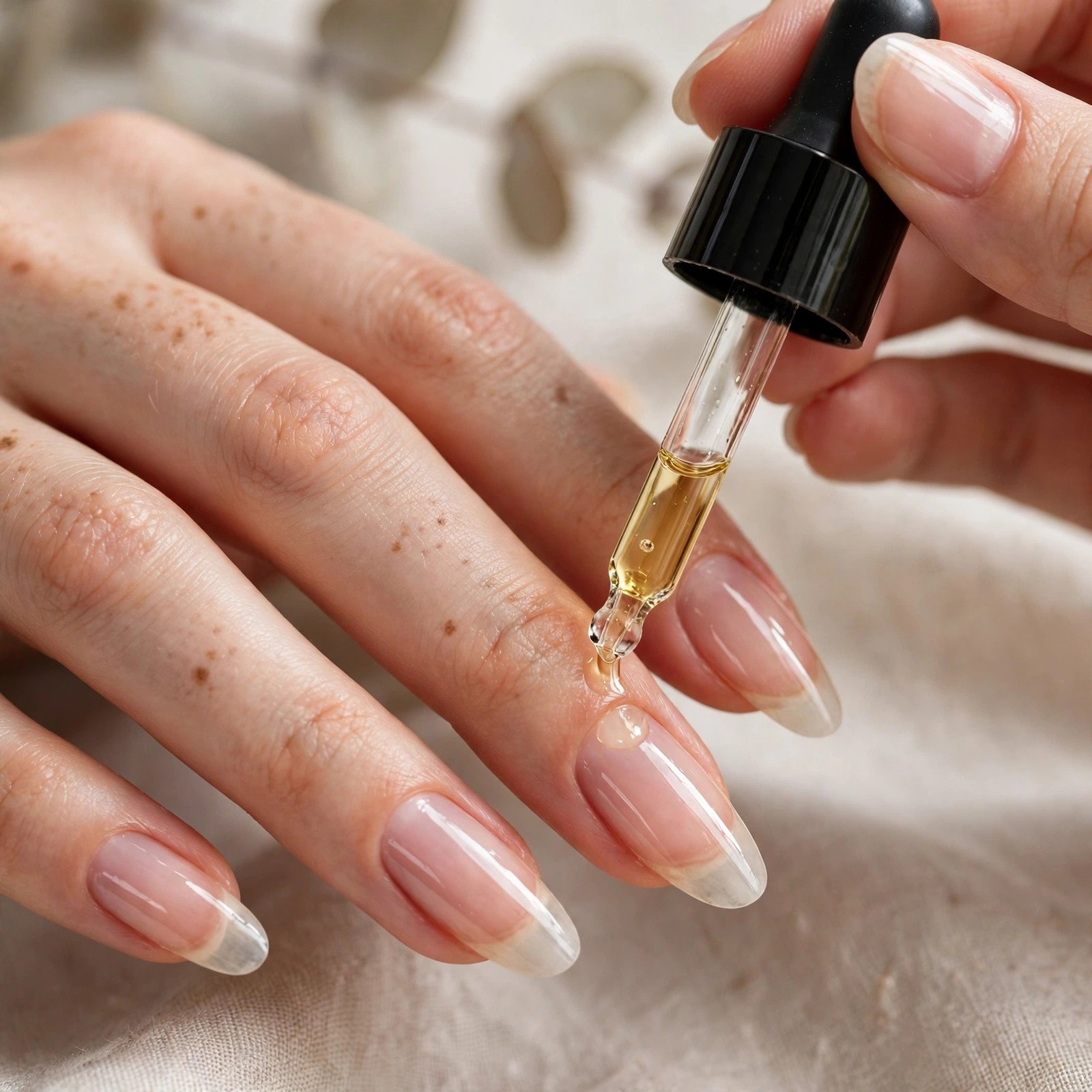
04. I Made Cuticle Oil My Evening Ritual
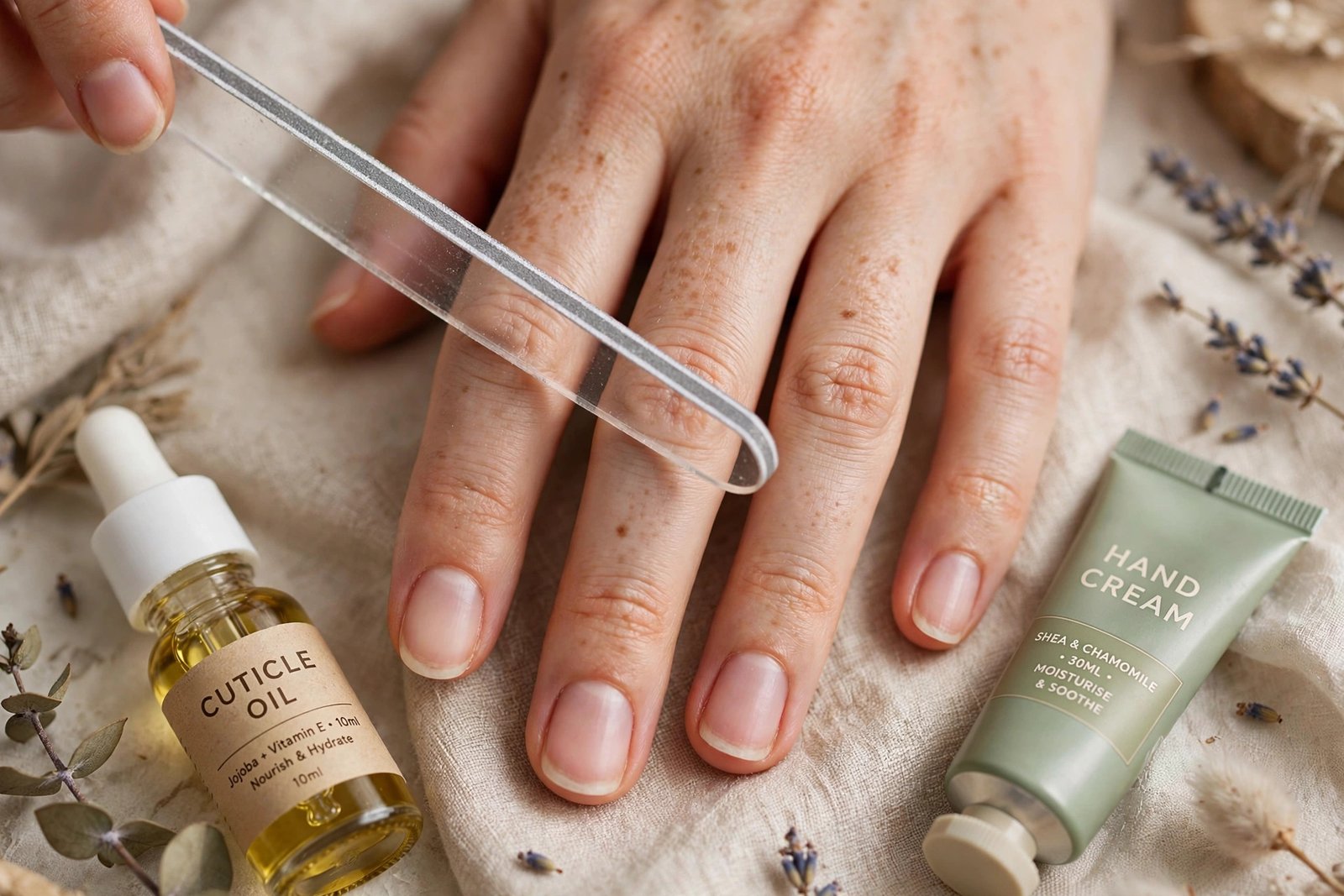
Every night, after washing my hands, I massaged a drop of cuticle oil into each nail bed and around each cuticle. I chose the evening deliberately: it replaced the television-biting window, which Step 01 had flagged as my worst trigger, with something my hands actually had to do. Within two weeks my cuticles stopped looking ragged, which mattered, because ragged cuticles had always been a second invitation to pick. The oil also made my nails more flexible, so they bent instead of snapping when they caught on something, and that flexibility saved several nails during the fragile early growth. The ritual itself — slow, deliberate, two minutes of attention to my hands — rewired how I related to them. My nails went from something I attacked to something I looked after, and that shift did quiet work that no polish ever could.
Best for: anyone whose biting shades into picking at cuticles and hangnails, which is more common than most people admit.
Fino Tip: Keep the oil where the biting happens, not in the bathroom cabinet. Mine lives next to the sofa because that is where I used to bite. A product you have to go and fetch will lose to a habit that is already in your hands.
05. I Filed Instead of Biting — Every Single Time
This is the rule that replaced the habit rather than just suppressing it. Whenever I felt a rough edge, a snag, or the urge to even out a nail with my teeth, I reached for a glass file instead. I kept one in my bag, one at my desk, and one by the sofa, so there was never an excuse about not having one nearby. Filing takes about thirty seconds per nail, it leaves a smooth edge that does not invite further picking, and — crucially — it gives the restless part of your brain the same small, repetitive, satisfying action that biting used to provide. The first week I filed almost daily, because short nails growing out develop rough edges constantly. That is normal, not a sign of failure. After a month I was filing twice a week. If you take one mechanical trick from this whole article, take this one: a file in every room beats a resolution in your head.
Best for: people whose main trigger is a rough or uneven nail edge rather than pure stress.
06. I Booked a Manicure as a Commitment Device
Three weeks in, when the biting had mostly stopped but my nails were still short and unimpressive, I booked a proper manicure. Not because my nails were ready to show off — they were not — but because spending money on them changed how I treated them. I was suddenly a person with a manicure appointment to protect, and that small commitment made biting feel like wasting something rather than just a private slip. The manicurist shaped my nails evenly, pushed back my cuticles properly, and gave me a neat, natural finish that made the awkward stage look intentional. I went back every two weeks for two months, and each visit reset my nails to a clean baseline. It also taught me what my natural nail shape actually was, which I had never seen, having never let them grow. If salon visits are not in your budget, a weekly at-home manicure ritual with shaping, buffing, and a clear coat does the same psychological job.
Best for: anyone who needs an external reason not to bite during the fragile weeks three to six.
07. I Planned Exactly What to Do After a Slip
I relapsed in week five, badly, during a family argument. I destroyed two nails in about four minutes and spent the evening convinced I had failed completely. The next morning I did the thing that saved the whole project: I filed the damaged nails smooth, oiled them, and carried on as if the slip were a data point rather than a verdict. That is the plan I wish I had written down before I needed it. A slip is not a restart — you do not lose the weeks of cuticle healing or the filing habit because of one bad evening. The dangerous part of a slip is never the bitten nail. It is the story you tell yourself afterwards, that you are back to square one. Decide now, while you are calm, what you will do after a slip: file smooth, oil, and continue. Write it on your phone, so when the moment comes you will not have to think.
Best for: everyone, honestly — but especially perfectionists who turn one slip into a full relapse.
Fino Tip: After a slip, file the bitten nail immediately, even if it is late and you are upset. A smooth edge removes the temptation to “even it out” with your teeth tomorrow morning, which is how one bad nail becomes five.
08. I Survived the Awkward Stage on Purpose
Between weeks three and eight, my nails looked strange. They were different lengths because they grew at different rates, my thumbnails kept breaking at the same weak spot, and the white tips were uneven in a way that made me want to hide my hands. This is the stage where most people quit, and I nearly did twice. What got me through was reframing it: the awkward stage is not a sign that growing your nails is not working, it is proof that it is. Bitten nails never reach the awkward stage at all. I kept them shorter than I wanted for longer than I wanted, filed them into a soft rounded shape that forgave uneven growth, and wore a sheer nude polish that made the unevenness far less visible. If you are in this stage right now, your nails are not failing. They are mid-process, and mid-process is supposed to look unfinished.
Best for: anyone in weeks three to eight who is tempted to bite “just the uneven ones” back into symmetry.
09. I Fed My Nails From the Inside, Too
Once the biting stopped, I realised my nails themselves were weak — they peeled in layers and snapped at the slightest knock. That is partly the legacy of years of biting, which damages the nail bed, and partly nutrition and care. I started paying attention to the basics: enough protein, staying hydrated, and not using my nails as tools to open cans or scrape labels, which is a habit biters often carry over. I also read up on what actually supports growth, including whether biotin is worth taking for stronger nails, rather than expecting one miracle product to fix them. For a fuller picture of the whole process, my guide to growing nails out healthily covers the habits that matter once length starts coming. No supplement undoes biting damage overnight; what worked was months of consistent care, and the nails that grew in after I stopped biting were noticeably stronger than the ones I had chewed for years.
Best for: former biters whose regrown nails peel, split, or break easily in the first few months.
10. I Built a Maintenance Routine I Could Actually Keep
The unglamorous secret of long nails is that keeping them is a routine, not a one-time achievement. Mine takes about ten minutes a week: file into shape, push back cuticles gently after a shower, oil every night, and a strengthening base coat when I am not wearing colour. I also learned to treat breakage as maintenance rather than tragedy — if a nail breaks, I file them all to a shorter, even length instead of letting one long nail and nine short ones drive me mad. If a break is really bad, knowing how to repair a broken nail properly has saved me more than once from picking at the damage. And because years of biting left my cuticles in rough shape, a regular cuticle routine is now the non-negotiable part of the week, the bit I never skip. Long nails are not a destination you arrive at; they are a habit you replace the old one with.
Best for: anyone who has grown their nails out once before and then lost them to neglect or one bad break.
What My Nails Actually Looked Like, Week by Week
Weeks one and two were the hardest and the least photogenic. My nails were short, filed smooth, and coated in bitter polish that I reapplied every other day. The urges came in waves — strong in the evenings, almost absent in the mornings — and I filed my nails constantly because every tiny bit of growth produced a rough edge that tempted me. I did not look at my hands with pride during this period. I looked at them with suspicion, which is a strange thing to admit, but if you are in week one right now, that feeling is normal and it passes. The win in these weeks is not length. It is days without biting, and I counted them the way other people count anything they are trying to build.
Weeks three and four were when the change became visible, mostly in my cuticles. They stopped looking torn, the redness around my nail beds faded, and for the first time I could see the actual shape of my nails emerging. My nails were still short — I was deliberately keeping them that way — but they looked cared for rather than attacked, and that visual difference mattered enormously for my motivation. This was also when I booked the manicure from Step 06, and coming home with neat, even nails gave me something I had never had before: a baseline I wanted to protect. The urges were still there, especially when I was bored, but they were quieter and further apart, and filing had become automatic enough that I reached for the file before I reached for my teeth.
By months two and three, I had actual length — not dramatic, not salon-advert dramatic, but real white tips and nails I could paint without embarrassment. One thumbnail still broke twice at the same weak point, which taught me that some nails need extra patience and a shorter shape while the damaged part grows out completely. Around the ten-week mark, a friend asked if I had had extensions, and I nearly cried, because nobody had ever mistaken my real nails for anything but bitten. If you are starting today, three months is a realistic horizon for nails you genuinely like, not the two weeks that hopeful articles promise. It is slower than you want and faster than you fear, and every week you do not bite is a week your nail bed is healing underneath, even when the surface does not show it yet.
Mistakes to Avoid
The first mistake I made was trying to grow them long immediately. I went from bitten nubs to attempting full length in one jump, and the result was five uneven, snagging nails that practically invited me to bite them back into symmetry. Growing length is the last step, not the first — the first steps are stopping the biting, healing the cuticles, and learning to file. If you skip those and chase length, you will be back where you started within a fortnight, and you will blame your willpower instead of your sequence.
The second mistake was relying on bitter polish alone. I treated it as the whole solution for a month, and the day I ran out and forgot to buy more, I relapsed completely within forty-eight hours. A single tool is a single point of failure. The system that finally worked had five overlapping defences — filing, oil, short nails, a busy-hands habit, and a slip plan — so that any one of them failing did not collapse the whole thing. If your plan has only one leg, it will fall over.
The third mistake was picking at my cuticles as a substitute. When I stopped biting my nails, my fingers found a new target, and I spent weeks tearing at hangnails and pushing my cuticles back aggressively until they bled. It felt like progress because my nails were intact, but it was the same habit wearing a different costume, and it kept my nail beds inflamed. If you catch yourself doing this, treat it as part of the same habit, not a harmless replacement — oil, gentle pushing after a shower, and trimming only actual hangnails with clean nippers, never tearing.
The fourth mistake was the all-or-nothing story I told myself after a slip. For years, one bitten nail meant the attempt was over, which gave me unconscious permission to destroy the rest. The reframe in Step 07 — a slip is a data point, not a verdict — is the single most important mental shift in this entire article. People who succeed at quitting nail biting are not people who never slip. They are people who slip, file smooth, and carry on the next morning as if nothing happened, because in the long run, nothing did.
Frequently Asked Questions
How long does it actually take to stop biting your nails? The automatic urge faded significantly for me after about three weeks, and was mostly gone by two months, but I would not call myself fully free of it until around the three-month mark. That timeline is normal. Anyone promising a week is selling you something, and anyone who says it takes a year is trying to scare you. Three weeks to feel different, three months to feel safe.
Will my nails ever look normal after years of biting? Yes, but be patient with the timeline. The nail bed heals gradually as new, undamaged nail grows out, which takes several months for a full replacement. My nails at three months looked dramatically better than at three weeks, and at six months they looked like they had never been bitten. Severe, long-term biting can change the shape of the nail bed slightly, but for most people the improvement is far bigger than they expect.
Does bitter polish really work, or is it a gimmick? It works as a short-term interrupter, not as a cure. It broke my automatic hand-to-mouth motion for about ten days, which was exactly long enough to build better habits around it. It stops working once you get used to the taste, and it does nothing for boredom biting. Use it to buy yourself the first two weeks, and build the rest of the system underneath it while it is still effective.
What should I do when one nail breaks after I have grown them out? File all of them to an even, slightly shorter length rather than letting one short nail torment you into biting the rest. A break is maintenance, not failure — it happens to everyone with long nails, including people who never bit. If the break is painful or the nail is torn below the quick, keep it clean, protect it with a bandage for a day or two, and let it grow out before worrying about how it looks.
Is it worth taking supplements for nail growth? Supplements can help if you are actually deficient, but they are not a substitute for stopping the biting and caring for your nails consistently. I focused on protein, hydration, and a regular oiling and filing routine first, and those made a bigger visible difference than anything I swallowed. If your nails stay weak after several months of good care, that is worth a conversation with a doctor rather than another bottle of pills.
Can I wear nail polish while I am trying to quit? Absolutely, and I recommend it. A coat of colour makes your nails feel like something worth protecting, it makes biting more visible and less appealing, and it covers the awkward stage beautifully. Start with a strengthening base coat and a sheer or nude shade while your nails are short, and save the bold colours for when you have length you are proud of.
What I Would Tell You If You Are Starting Today
If you are reading this with bitten nails and a familiar sense of having failed at this before, I want you to know that I was exactly where you are, and that the version of me who finally did it was not stronger or more disciplined than the version who failed ten times. She just had a better system, built around her actual triggers instead of her imagined willpower. Start with the tracking week, even though it feels like delaying. Keep your nails short and smooth before you chase length. Put a file everywhere you bite, oil where you sit in the evenings, and write down your slip plan before you need it, because you will need it and that is fine. Three months from now you could have nails you like, and the only thing standing between you and that is a series of small, unglamorous, repeatable actions. I am not going to pretend it is easy. I am going to tell you it is possible, because I have the nails to prove it, and I spent twenty years believing it was not. Start tonight, with the oil and the file, and let the first quiet week surprise you.


