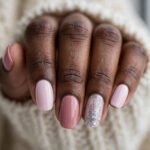
I have sat in a salon chair, phone in hand, staring at a menu that said “gel” three different ways, and realised I had no idea what I was actually about to book. Gel manicure. Gel-X. Gel extensions. Builder gel. The word “gel” was doing so much work on that menu that it had stopped meaning anything at all, and the receptionist, bless her, just smiled and said, “They’re all gel, love, just pick a colour.” That is how I ended up paying extension prices for what turned out to be a plain gel polish manicure on my own short nails — and, a month later, how I ended up asking for “gel” again and walking out with tips I hadn’t expected and couldn’t type with.
Here is the one-line answer, the one I wish someone had given me before either of those appointments: gel polish colours the nails you already have, while Gel-X adds length with soft-gel tips glued on with gel and cured under a lamp. Gel-X vs gel polish nails is not a battle between two colours or two brands. It is a choice between a coating and a structure. Everything else — the price, the appointment time, how long it lasts, how it comes off, and whether your natural nails survive it — flows from that single difference, and once you understand it, the salon menu suddenly reads like plain English.
I have now worn both systems properly, back to back, on purpose, and kept notes the way I wish I had the first time. I wore a Gel-X set for four full weeks and a gel polish manicure for three, through typing, gym sessions, cooking, and a weekend of hauling boxes, and I tracked what actually happened week by week instead of trusting what the salon told me. This is that comparison: the real costs, the real wear, the damage question answered honestly, the switching paths nobody talks about, and the decision framework I now use before I book anything with the word “gel” in it.
In This Article
- What Gel-X Actually Is (And What Gel Polish Is)
- Gel-X vs Gel Polish at a Glance
- Cost: What Each One Really Costs You
- How Long Each One Lasts (My Wear Test)
- Application and Appointment Time
- Damage Risk: Which Is Easier on Your Natural Nails?
- Removal: What Each One Involves
- Can You Switch? Gel Polish Over Gel-X, and the Other Way
- Which Should You Book? (The Decision Framework)
- Mistakes to Avoid
- Frequently Asked Questions
What Gel-X Actually Is (And What Gel Polish Is)
Gel polish is the one most of us meet first. Your natural nail is prepped — shaped, cuticles pushed back, surface lightly buffed — and then a base coat, two coats of coloured gel polish, and a top coat are painted on in thin layers, each cured under a UV or LED lamp. Nothing is added to your nail. The gel is a coating, like a very tough, very glossy paint that hardens into a flexible shell over the nail you already have. The length you walk out with is the length you walked in with, the shape is your own nail’s shape refined, and the whole point of the service is colour and chip resistance, not transformation.
Gel-X is a different animal wearing a similar name, and that is exactly where the confusion starts. Gel-X is an extension system created by the brand Aprés, though salons now use the name loosely for any soft-gel tip system, the same way people say “Hoover” for any vacuum. A full-cover soft-gel tip — a pre-shaped, flexible tip that covers your entire natural nail from cuticle to free edge — is glued on with a gel adhesive, pressed into place, and cured under a lamp so the tip and the adhesive fuse into one structure. Then colour goes on top, usually gel polish, exactly as it would on a natural nail. So the tip is the nail you see. It adds length and it adds shape: if you want almond nails but your own nails are short squares that break at the corners, Gel-X gives you the almond shape in one appointment.
The chemistry matters here, because it explains almost every difference that follows. Gel polish is a pigmented gel that cures into a thin, flexible film. A Gel-X tip is a solid piece of soft gel, much thicker and more structured, and the adhesive is also gel. That is why Gel-X feels different on your hands — there is genuinely more material there, a real extension with an apex and a structure that holds its shape under pressure. It is also why Gel-X soaks off completely in acetone, unlike acrylic, which needs heavy filing. Soft gel dissolves; hard gel and acrylic do not, or not easily. If you have ever had acrylics and hated the removal, this is the detail that will make you perk up, because Gel-X was designed specifically to solve that problem.
What tripped me up for the longest time was the menu language. Some salons list Gel-X under “extensions” and some list it under “gel manicures,” and a few list both a “gel manicure” and a “gel full set” without explaining that the full set is the extension. I have also seen “Gel-X” written on menus where the salon was actually using a different brand of soft-gel tips, which is fine — the technique is what matters, not the brand name on the box — but it means you cannot always trust the label alone. The question that cuts through all of it is the one I now ask before I sit down: “Is this adding length with a tip, or is it colour on my own nails?” If the answer is a tip, you are booking Gel-X. If it is colour on your own nails, you are booking gel polish. I wrote a longer walkthrough of the extension system itself in my Gel-X nails guide, if you want the full picture of how the tips work before you decide.
Fino Tip: If a salon menu just says “gel” with no qualifier, ask whether the price includes tips before you sit down. I once paid for a “gel set” that turned out to be gel polish on my own nails, and the fix — rebooking and paying again — cost me more than the original appointment.
Gel-X vs Gel Polish at a Glance
If you want the short version before the detail, here it is. Gel polish is a colour coating on your own nails: no length added, a 45 to 60 minute appointment, roughly $35 to $60 a set, and 2 to 3 weeks of wear. Gel-X is a full-cover soft-gel tip that becomes your new nail: length and shape added, a 60 to 90 minute appointment, roughly $60 to $150 a set depending on the salon and the nail art, and 3 to 4 weeks of wear. Both are cured under a lamp, both soak off in acetone, and both can carry exactly the same colours and nail art on top — the colour you see in the salon’s Instagram photos tells you nothing about which system is underneath it.
- Gel polish: a coating on your natural nails, no length added, thin and flexible feel, 45 to 60 minutes in the chair, roughly $35 to $60 per set, lasts 2 to 3 weeks, soaks off in acetone in about 15 to 20 minutes, easiest on natural nails when removed properly, and the best choice when you are happy with your own length and just want colour that does not chip.
- Gel polish is best for: everyday wear, short to medium natural nails, first-timers, anyone on a tighter budget, and anyone who types all day and hates the feeling of length.
- Gel polish struggles with: very short or bitten nails, nails that peel or split, anyone who wants dramatic length or a completely different shape, and chronic nail-biters who need a protective layer.
- Gel-X: a full-cover soft-gel tip glued on with gel and cured, adding length and a new shape, a thicker and more structured feel, 60 to 90 minutes in the chair, roughly $60 to $150 per set, lasts 3 to 4 weeks, soaks off in acetone in about 20 to 30 minutes once the bulk is filed down, and the best choice when you want length, a new shape, or a protective shell over weak nails.
- Gel-X is best for: special occasions, holidays, photos, anyone whose natural nails will not grow past a certain point, and anyone who wants almond or coffin shapes their own nails cannot hold.
- Gel-X struggles with: very tight budgets, people who hate the feeling of extensions, heavy manual work without care, and anyone who expects acrylic-style fills — Gel-X sets are removed and redone, not filled the way acrylics are.
My verdict on the glance test is simple, and it is the same verdict I give friends who text me a screenshot of a salon menu: if you like your own nails and only want them to look polished for two to three weeks, gel polish wins on price, time, and simplicity, and there is no reason to pay extension money. If you want length or a shape your own nails cannot give you, gel polish cannot do that job at any price, and Gel-X is the better tool — not the better product in some absolute sense, but the right one for that specific goal. The mistake is treating them as rivals. They are two tools in the same drawer, and the rest of this comparison is about which tool fits your hands, your budget, and your life right now. For the other half of the length question, my Gel-X vs acrylic comparison covers what happens when you want even more strength than soft gel offers.
Cost: What Each One Really Costs You
The sticker price is where most people stop, and it is misleading, because these two systems do not cost the same amount over a year. A gel polish manicure typically runs roughly $35 to $60, depending on the salon, the city, and whether you add nail art or a French tip. A Gel-X set typically runs roughly $60 to $150, with the spread explained by length, shape, nail art complexity, and how expensive the salon’s neighbourhood is. A plain Gel-X set in a modest salon might be $60 or $70; the same set with hand-painted art in a high-end city salon can easily pass $120. I have paid both ends of that range, and the cheaper Gel-X set was not worse — it just had no art and a shorter length.
But the per-set price is only half the maths, and the yearly maths is where the comparison gets interesting. Gel polish lasts 2 to 3 weeks, so if you keep it up all year you are booking roughly 17 to 26 sets. At $45 a set, that is somewhere around $765 to $1,170 a year, plus removal if your salon charges for it. Gel-X lasts 3 to 4 weeks, so you are booking roughly 13 to 17 sets a year. At $85 a set, that is roughly $1,105 to $1,445 a year. Gel-X is still more expensive over a year in most cases, but the gap is much smaller than the per-set prices suggest, because you go back less often — and fewer appointments also means less of your time spent in the chair, which is worth something too, especially if your salon is a drive away.
There are costs hiding inside both numbers that nobody puts on the menu. Gel-X removal often costs extra, sometimes $15 to $25, because it takes longer than a gel polish soak-off and involves filing the bulk down first. Some salons fold removal into the price of the next set if you rebook with them, and some do not, so I ask now before I book: “Is removal included, or is that separate?” Nail art is the other hidden cost, and it hits Gel-X harder, because people tend to order more elaborate art on extensions — the bigger canvas invites it — and intricate art on ten long nails takes a technician far longer than the same art on short natural nails. And if you are comparing against doing it at home, a gel polish starter kit with a lamp and a few colours can cost less than two salon sets, while a Gel-X kit costs more upfront and has a steeper learning curve, which I get into in the application section. The honest summary is this: gel polish is the cheaper habit in almost every scenario, Gel-X is a premium you pay for length and shape, and the only way Gel-X wins on money is if you were already paying for frequent gel polish appointments with heavy art and you stretch each Gel-X set to a full four weeks.
Fino Tip: Before you book Gel-X, ask for the full price out loud: set, art, and removal. I once budgeted $70 for a set and left having paid $105 because the art was priced per nail and removal was extra. The ten-second question at the desk saves the awkward surprise at the till.

How Long Each One Lasts (My Wear Test)
Salons quote wear times with the confidence of people who never have to live with the result, so I tested both systems myself, back to back, and wrote down what actually happened. I wore Gel-X first, in a medium almond shape, and then gel polish on my own nails in a soft nude, and I lived normally through both — typing eight hours a day, gym sessions, cooking, cleaning, and one memorable weekend hauling boxes up three flights of stairs. This is the diary, unedited and unflattering where it needs to be.
My Gel-X diary went like this. Week one was the honeymoon. The set looked salon-perfect, the almond shape was exactly the shape I had screenshotted, and the tips felt strange for the first day — a noticeable weight at the ends of my fingers, like wearing rings I kept forgetting about — and then my brain adjusted and I stopped noticing them. Typing was slower for two days, then fine. I could open cans, tap my phone, and do up small buttons, but I learned quickly to use the pads of my fingers instead of my nail tips for anything fiddly. Week two was the sweet spot: no lifting, no chips, the shine still glassy, and the grow-out only just starting to show as a faint line at the cuticle. I got more compliments in week two than in week one, because the set had settled and looked like it belonged to me. Week three brought the first honest signs of age. One tip on my dominant hand developed a tiny lift at the corner where I had been prying open a paint tin — my fault, not the product’s — and the grow-out gap was now visible enough that I noticed it in photos. The rest of the set was still solid, and a careful person could have carried it to week four looking respectable. Week four was the end of the road for me. The grow-out was obvious, two more tips had small lifts at the edges, and the set felt top-heavy, as if the length was pulling away from my nail beds. I removed it at the start of week four rather than pushing to a full four weeks, and the honest verdict is that Gel-X gave me three great weeks and a fourth week that was wearable but visibly ageing. If you want the detail on stretching that third week into a fourth, my guide to making Gel-X last longer covers the habits that actually moved the needle for me.
My gel polish diary was shorter, and in some ways more impressive for what it is. Week one was flawless: thin, light, completely natural feeling, and I forgot I was wearing anything within hours. I typed at full speed from day one, opened everything normally, and the colour — a soft nude with a hint of pink — looked like my nails, only better. Week two was still good, with the first faint signs of wear at the very tips of my two most-used fingers, the kind of thing only I would notice, and a thin grow-out line starting at the cuticles. Week three was the decision point. The grow-out gap was clearly visible, the free edges had a few tiny chips where I had used my nails as tools, and the shine had dulled slightly at the tips. It still looked presentable from a normal distance, and I have definitely seen worse gel polish at week three, but it was done — another few days and it would have started looking tired rather than polished. I removed it at the end of week three, and my honest verdict is that gel polish gave me two excellent weeks and a third week that was acceptable, with none of the weight or adjustment of Gel-X. For a fuller picture of what affects that timeline, my guide to how long gel nails last breaks down the factors that stretch or shrink it.
Comparing the two diaries honestly, Gel-X lasted about a week longer in real life — three great weeks against two — and it looked more dramatic the whole time, because length and shape do that. But it also demanded more from me: more care with my hands, more attention to lifting, and a removal that took longer. Gel polish asked almost nothing of me and gave me two very good weeks. The wear ranges salons quote, gel polish 2 to 3 weeks and Gel-X 3 to 4 weeks, held up in my test, with one caveat I think matters: the top of each range assumes you treat your nails gently, keep them out of prolonged water, wear gloves for cleaning, and do not use them as tools. The weekend I hauled boxes cost my Gel-X set a corner lift and would have cost a gel polish set a chip. Your lifestyle moves you up or down inside those ranges more than the product does.
Application and Appointment Time
A gel polish appointment is the quicker, simpler visit. The technician shapes your nails, pushes back cuticles, lightly buffs the surface, dehydrates it, and paints on base coat, colour, and top coat, curing each layer under the lamp for 30 to 60 seconds. The whole thing takes 45 to 60 minutes, and a good technician can do it in 45. There is very little that can go wrong structurally, because nothing is being built — the appointment is mostly prep and painting, and if a layer is slightly uneven it can be corrected before curing. I find it the more relaxing appointment of the two. You sit, you pick a colour, you hold still under a lamp, and you leave.
A Gel-X appointment is a build, and it feels like one. Each natural nail is prepped, then a tip is sized to it — too wide and it lifts at the sides, too narrow and it looks pinched — and the tip is applied with gel adhesive, pressed on at an angle to avoid air bubbles, and flash-cured for a few seconds before the full cure. Then the tips are shaped, the surface is refined, and colour goes on top exactly as it would in a gel polish appointment. The whole visit runs 60 to 90 minutes, and a full set with art can push past 90. There are more steps, more decisions — length, shape, tip size — and more chances for a small error to matter, because a badly sized tip or a trapped air bubble is a lift waiting to happen two weeks later. I have had one Gel-X set where a tip was sized a fraction too wide and it lifted at the side by week two. That was a sizing error, not a Gel-X problem, but it taught me that the technician’s skill matters more with Gel-X than with gel polish, and that choosing an experienced technician is worth more than choosing a cheaper salon.
The at-home angle is where the two systems really separate, and it is a gap I think every comparison should cover. A gel polish kit is genuinely DIY-able for most people. A lamp, a base and top coat, a few colours, and some practice, and you can do a respectable set at home — I have, and my guide to doing gel nails at home walks through the routine I settled on. The learning curve is mostly about thin coats and not flooding the cuticles. A Gel-X kit is a different proposition. Sizing ten tips, applying adhesive without bubbles, flash-curing at the right angle, and shaping extensions evenly is a real skill, and my first at-home attempt took nearly two hours and produced two tips I had to redo. It is learnable — plenty of people do beautiful Gel-X at home — but it is not a casual first DIY project. If your reason for going DIY is saving money, gel polish pays off far faster. If your reason is that you want length at home and you are willing to practise, Gel-X kits are worth it, but budget for a messy first few sets and watch sizing tutorials before you buy anything.
Fino Tip: At a Gel-X appointment, watch the sizing step. If a tip overhangs the sides of your natural nail or pinches at the edges, speak up before it is cured. Once the adhesive is cured, a wrong size is a lift waiting to happen, and it is ten seconds of awkwardness now versus a ruined nail in two weeks.
Damage Risk: Which Is Easier on Your Natural Nails?
This is the question I get asked most, and it is the one with the least honest answer floating around. The short version is that neither system damages healthy nails when it is applied and removed properly, and both can damage them when it is not. The long version is where the real nuance lives, and it starts with understanding that “damage” usually means two different things: the chemical and mechanical stress of the service itself, and what happens when removal goes wrong.
Gel polish is the gentler system on paper, because there is less material involved and less filing. The prep is a light buffing of the nail surface, which removes a tiny amount of the top layer, and the product itself is thin and flexible. Where gel polish earns its bad reputation is in the cycle, not the single appointment: if you wear it back to back for months, with the surface buffed and the polish soaked off every two to three weeks, the repeated buffing and the acetone exposure dry the nail plate out. My own nails after three months of continuous gel polish were thinner and more flexible than I liked, with a little peeling at the free edge. They recovered in a few weeks of naked nails and cuticle oil, but the lesson stuck — the damage was cumulative, and it came from never giving my nails a break, not from any one manicure.
Gel-X adds two extra risk factors and one protective one, and I think both sides deserve airtime. The risks are the prep, which can be slightly more aggressive because the technician needs a clean, dehydrated surface for the adhesive to bond, and the weight and leverage of the extension itself: a long tip acts as a lever, and a hard knock can bend or break the tip and take some of your natural nail with it. I have had a Gel-X tip catch on a drawer handle and felt the pull right down to the nail bed in a way gel polish never caused. The protective factor is that the tip is a shield: while it is on, your natural nail underneath is covered and cannot split, peel, or catch on anything. For someone whose nails constantly break at the same short length, that shield is genuinely useful — it is why some people with weak nails love Gel-X. The honest comparison is that Gel-X is slightly riskier per incident and slightly more protective day to day, and the net effect depends on how careful you are with your hands.
What matters more than the product is the removal, and I will say this plainly because it is the part nobody warns you about: most nail damage blamed on Gel-X or gel polish is actually removal damage. Picking, prying, or peeling a set off pulls layers of your natural nail away with it, and one bad removal can do more harm than six months of careful wear. A proper soak-off, with the bulk filed down first for Gel-X and acetone doing the dissolving, leaves the nail plate intact. I learned this the expensive way when I peeled a lifting Gel-X tip off in a moment of impatience and took a thin layer of nail with it, and the ridge it left took weeks to grow out. If you are choosing between the two systems partly on damage, the real question to ask is which one you are more likely to remove patiently — because that, more than the product, decides what your nails look like afterwards. If you want a third option that sits between these two on strength, my BIAB vs gel polish comparison covers builder gel, which strengthens the natural nail without adding a tip.
Removal: What Each One Involves
Gel polish removal is the simpler of the two, and it is the one most people can do safely at home if they are patient. The shine is broken with a file, acetone-soaked cotton is wrapped on each nail with foil, and after 10 to 15 minutes the polish softens and can be gently pushed off with an orange wood stick. The whole process takes 15 to 20 minutes plus the filing. The key word is gently: if the polish resists, it needs more time in the acetone, not more force. I have done this at home many times, and my guide to removing gel polish at home has the full step-by-step routine, including the mistake I made the first time, which was skipping the filing step and wondering why nothing was dissolving after twenty minutes.
Gel-X removal takes longer because there is simply more material to dissolve. The bulk of the tip has to be filed down first — either by hand, which takes patience, or with an e-file in the salon, which is fast but should only be done by someone trained — and then the same acetone soak softens what is left. In the salon, the whole removal runs 20 to 30 minutes; at home, budget 30 to 40 minutes and do not rush the filing step, because acetone cannot dissolve a thick tip quickly on its own. I remove Gel-X at home now, following my Gel-X removal guide, and the routine is the same as gel polish once the bulk is down: soak, wait, push gently, repeat if needed. The temptation to skip the filing and just soak longer is real, and it does not work — after thirty minutes in acetone a full-thickness tip is still stubborn, and that is exactly when people start prying.
The practical difference is the time and the stakes. Gel polish removal is a fifteen-minute job you can fit into an evening. Gel-X removal is a half-hour job that rewards patience and punishes impatience, because prying a tip off is the single most damaging thing you can do to your natural nails. If you are someone who picks at lifting nails — and be honest with yourself, because most of us do — gel polish is the more forgiving system, because there is less to pick at and less damage when you do. If you can commit to soaking properly, Gel-X removal is perfectly safe. But if you know you will be the person peeling tips off in a car park, book gel polish, and save yourself the ridges.
Can You Switch? Gel Polish Over Gel-X, and the Other Way
This is the section I most wish had existed when I was confused, because the switching paths are where people waste the most money. Yes, you can put gel polish over Gel-X — in fact, that is what usually happens. The colour on a Gel-X set is almost always gel polish, painted onto the tip and cured exactly as it would be on a natural nail. The tip is the structure and the gel polish is the colour. So “gel polish over Gel-X” is not a hack or a workaround; it is the normal way a Gel-X set is finished. You can also change the colour on a Gel-X set without removing the tips, by filing off the colour layer and repainting, though most salons will just remove and redo the whole set, because Gel-X is not designed for fills the way acrylic is.
Regular polish over Gel-X works too, and it is the trick I use when I want a colour change mid-set without a salon visit. Ordinary nail polish sits fine on top of a Gel-X tip — use a base coat, paint as normal, and remove it later with non-acetone remover, because acetone remover will soften the gel underneath. I have changed the colour on a Gel-X set twice in one week this way, and it bought me an extra week of feeling fresh without touching the structure. The rule is simple: anything that goes on top of Gel-X is fine as long as whatever removes it later does not dissolve gel. Non-acetone remover is your friend here.
The other direction — Gel-X over gel polish — does not work, and understanding why saves a wasted appointment. Gel-X adhesive needs to bond directly to a clean, prepped natural nail. If there is gel polish in the way, the adhesive bonds to the polish instead of the nail, and the tip lifts within days. A salon will always remove old gel polish before applying Gel-X, and there is no shortcut around it. Similarly, Gel-X over very short or bitten nails is possible but comes with a warning I think should be shouted louder: the tip needs enough natural nail to grip. If your nails are bitten down to the quick, the tip has almost nothing to bond to, and it will lift quickly. Some technicians will build a tiny bit of builder gel first to create a platform, and some will simply tell you to grow your nails for two weeks first. If a salon offers to put long Gel-X tips straight onto bitten nails with no discussion, that is a red flag, and I would walk away. Short nails are fine for Gel-X — mine were short when I first tried it — but bitten-to-the-quick nails are a different situation, and an honest technician will say so.
Fino Tip: If you love your Gel-X shape but hate the colour by week two, do not book a whole new set. A coat of regular polish over the tips, removed later with non-acetone remover, gives you a fresh colour for the price of a bottle you already own.
Which Should You Book? (The Decision Framework)
Forget “do you want length?” as the only question. That is where every other comparison stops, and it is not enough, because length is only one of four things that should decide this for you: your natural nails, your budget, your lifestyle, and your patience for maintenance. Here is the framework I actually use now, and the one I run through in my head before I book.
Start with your natural nails. If your nails are healthy, a decent length, and hold a shape you like, gel polish is almost always the right answer — you are paying for colour and chip resistance, and you do not need a structure you already have. If your nails are weak, peel constantly, break at the same short length no matter what you do, or are bitten short, Gel-X earns its price: the tip is a shield and a shape your own nails cannot give you. If your nails are bitten to the quick, wait — grow them for two weeks, or ask about builder gel as a stepping stone, because Gel-X needs something to grip.
Then look at your budget honestly, over a year rather than a single appointment. Gel polish at roughly $35 to $60 a set, every two to three weeks, is the cheaper habit, and if you are booking regularly, the yearly difference is hundreds of dollars. If you are on a tight budget, gel polish wins and it is not close. Gel-X makes financial sense when you want it for a specific stretch — a holiday, a wedding, a season where you want to look polished — rather than as a permanent habit, or when the longer wear genuinely means fewer appointments. I treat Gel-X the way I treat a good pair of occasion shoes: worth it for the event, not the everyday.
Then your lifestyle, which is the part people skip and then regret. If you type all day, Gel-X’s length will slow you down for the first few days and you will catch tips on your keyboard. If you go to the gym, lift weights, do manual work, garden, or have small children you are constantly picking up, long tips will catch, lift, and break more often — gel polish is nearly invisible to all of those activities. If your hands spend a lot of time in water, through cleaning or swimming or long baths, both systems suffer, but Gel-X suffers more because water can creep under a lifting edge. If your life is mostly desk work and social plans, Gel-X is easy to live with. If your life is hands-on, gel polish is the kinder choice, and the length you give up is length you would have broken anyway.
Finally, your patience. Gel-X asks more of you: longer appointments, longer removals, more care with your hands, and a higher chance of a mid-set lift you need to deal with. Gel polish asks almost nothing. So my final verdict is this: book gel polish if you like your own nails, want the cheaper and easier habit, and live a hands-on life. Book Gel-X if you want length or a new shape, have an occasion or a season in mind, and are willing to pay more and care for the set. And if you are still torn, book gel polish first. It is cheaper to try, easier to remove, and if you find yourself wishing for length halfway through the set, you will know — with evidence, not guesswork — that Gel-X is your next booking.
Mistakes to Avoid
I have made nearly all of these myself, which is why I am confident listing them. The first mistake is booking by the word “gel” instead of by the service. I paid extension prices for a gel polish manicure once because the menu said “gel set” and I did not ask what the set included. Ask the question before you sit down: tips or my own nails? The second mistake is choosing Gel-X for bitten nails and expecting it to hold. The tips need a nail to grip, and on bitten nails they lift within days, which feels like the product failed when really the foundation was not there. Grow your nails first, or ask about builder gel as a bridge.
The third mistake is prying a Gel-X tip off when it starts to lift. I did this once in a moment of impatience and took a layer of my natural nail with it, leaving a ridge that took weeks to grow out. A lifting tip is a sign to soak it off properly, not to pull it. The fourth mistake is expecting Gel-X fills like acrylic. Gel-X sets are removed and redone, not filled, and anyone who tells you they can fill a Gel-X set the way they fill acrylics is either confused or cutting corners. Budget for a full redo every three to four weeks, not a cheaper fill appointment.
The fifth mistake is treating your nails like tools once you have length. Gel-X tips are strong, but they are levers, and using them to open tins, pry lids, or scrape labels is how corners lift and tips snap. Use the pads of your fingers, keep a small tool in your bag for fiddly jobs, and wear gloves for cleaning. The sixth mistake is skipping the removal question at booking — assuming removal is included when it is a separate $15 to $25 charge. And the last mistake is wearing either system back to back for months without a break and blaming the product when your nails feel thin. Both systems are fine in rotation with breaks; neither is designed to live on your nails forever without rest. A week of naked nails and cuticle oil between sets does more for your nail health than any strengthening product I have tried.
Frequently Asked Questions
Is Gel-X better than gel polish? Neither one is better in an absolute sense, because they do different jobs. Gel-X is better when you want length, a new shape, or a protective shell over weak nails, and it lasts about a week longer in my wear test. Gel polish is better when you are happy with your own length and want the cheaper, quicker, lower-maintenance option. The right question is not which is better, but which one fits your nails, your budget, and your life right now.
Does Gel-X damage your nails more than gel polish? Not when both are applied and removed properly. Gel-X involves slightly more prep and a heavier structure, and a hard knock can pull at the natural nail, but it also shields weak nails while it is on. In my experience, most damage blamed on either system is actually removal damage — picking or prying a set off pulls layers of the natural nail away. A patient acetone soak-off leaves your nails intact under both systems, and regular breaks between sets matter more than which product you choose.
Can you put gel polish over Gel-X? Yes, and that is how a Gel-X set is normally finished — the colour on top of the tips is almost always gel polish. You can also change the colour mid-set with regular polish, as long as you remove it later with non-acetone remover, because acetone remover will soften the gel underneath. What does not work is the reverse: Gel-X cannot be applied over gel polish, because the adhesive needs to bond directly to a clean natural nail.
How much does Gel-X cost vs gel polish? A gel polish set typically costs roughly $35 to $60, while a Gel-X set typically costs roughly $60 to $150, depending on the salon, the length, and the nail art. Over a year, Gel-X is still usually more expensive, but the gap is smaller than the per-set prices suggest, because Gel-X lasts three to four weeks against gel polish’s two to three, so you book fewer appointments. Ask whether removal and art are included before you book, because both can add $15 or more to the bill.
Can I do Gel-X at home? You can, but it is a much steeper learning curve than gel polish at home. A gel polish kit is genuinely beginner-friendly: a lamp, a base and top coat, and a few colours, and you can get a good result with a little practice. A Gel-X kit requires sizing ten tips, applying adhesive without air bubbles, flash-curing at the right angle, and shaping extensions evenly, and my first at-home attempt took nearly two hours with two tips to redo. If you want to DIY, start with gel polish, and move to Gel-X kits once you are comfortable with a lamp and thin coats.
Can you get Gel-X on short nails? Yes, short nails are fine for Gel-X — my first set went onto short natural nails and held well, because the tip has enough nail to grip. The problem is bitten nails, where the nail is so short there is almost nothing for the adhesive to bond to. If your nails are bitten to the quick, grow them for a couple of weeks first, or ask your technician about builder gel as a stepping stone. An honest technician will tell you if your nails are too short for a good result rather than taking your money for a set that will lift.